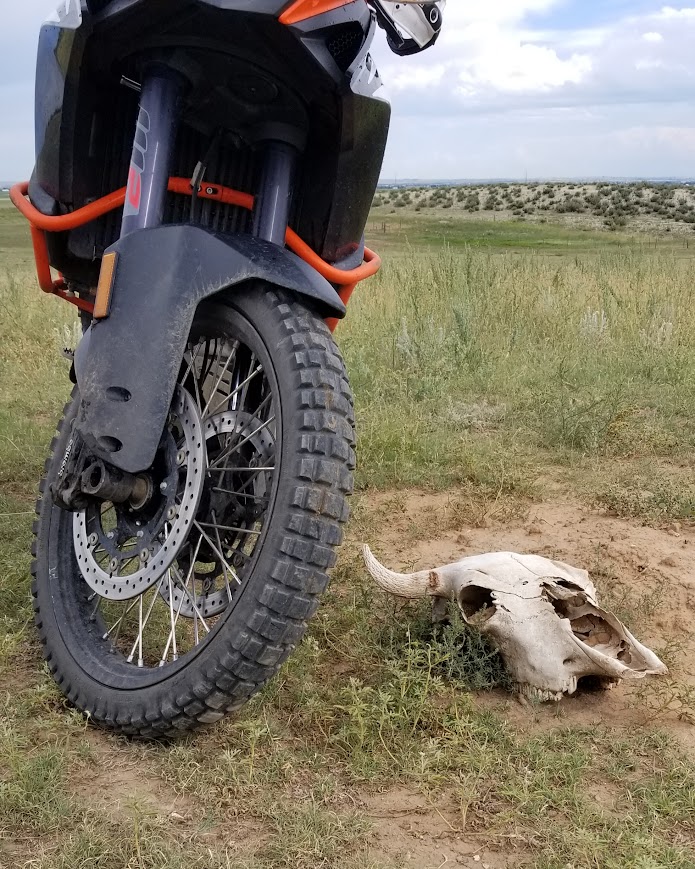
Riding a motorcycle off pavement is best begun in one’s youth, not when the vultures of the AARP hove commenced their circling and are dropping their postcards, envelopes, and e-mails into one’s inboxes. But in my early 50s, I came to learn of what is called “Adventure Motorcycling” when my niece pointed me towards the Long Way Round series. In it, a pair of friends motorcycle across Europe, Asia, and North America. My niece made her recommendation to me in July 2016 over dinner in Portland, OR. As it happened, I was on my first multi-state motorcycle ride. My trusty, if somewhat uncomfortable Yamaha cruiser had carried me there.
By the end of 2018, the Yamaha me from the Denver area to the west coast three times and twice to the east coast. The bike and I have enjoyed the salty tang while resting on Municipal Pier #2 over Monterey Bay, ferried over Puget Sound from Seattle to the Olympic Peninsula, and ridden over and under the Chesapeake Bay on the Bridge Tunnel from the DelMarVa peninsula to Hampton Roads.
Pro tip: You can click any image in the gallery to enlarge it
and make the obtrusive caption disappear!
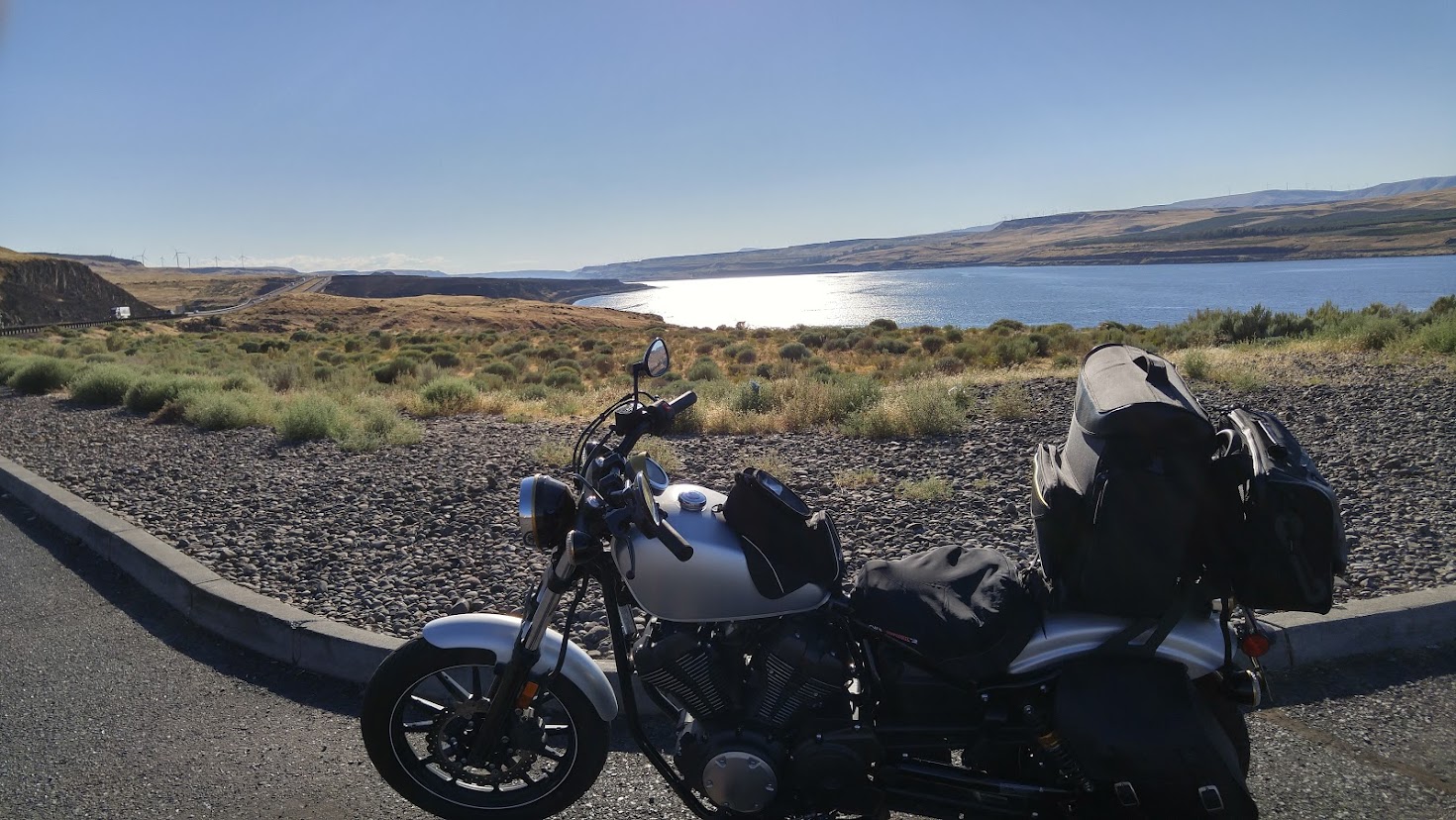
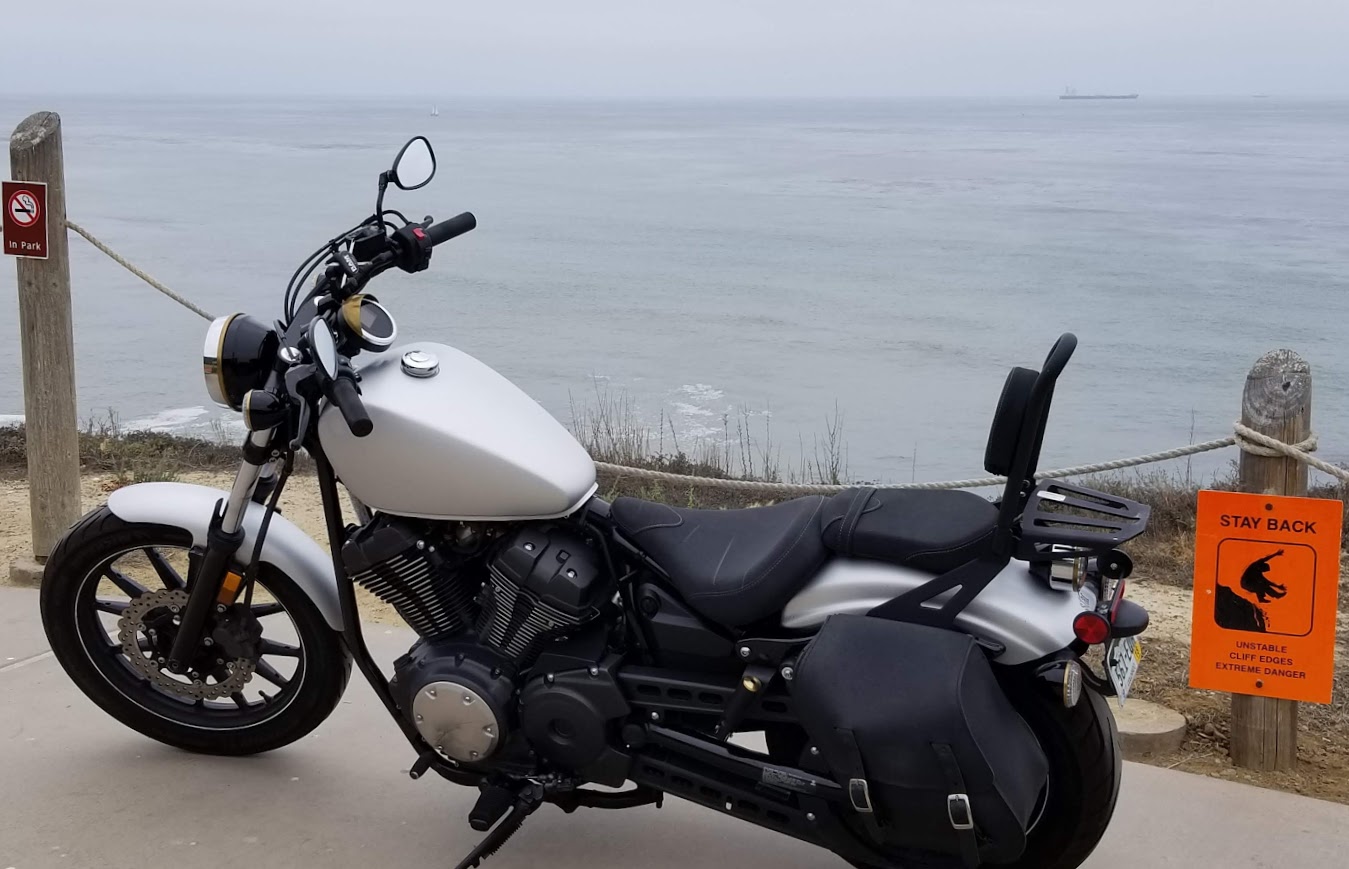
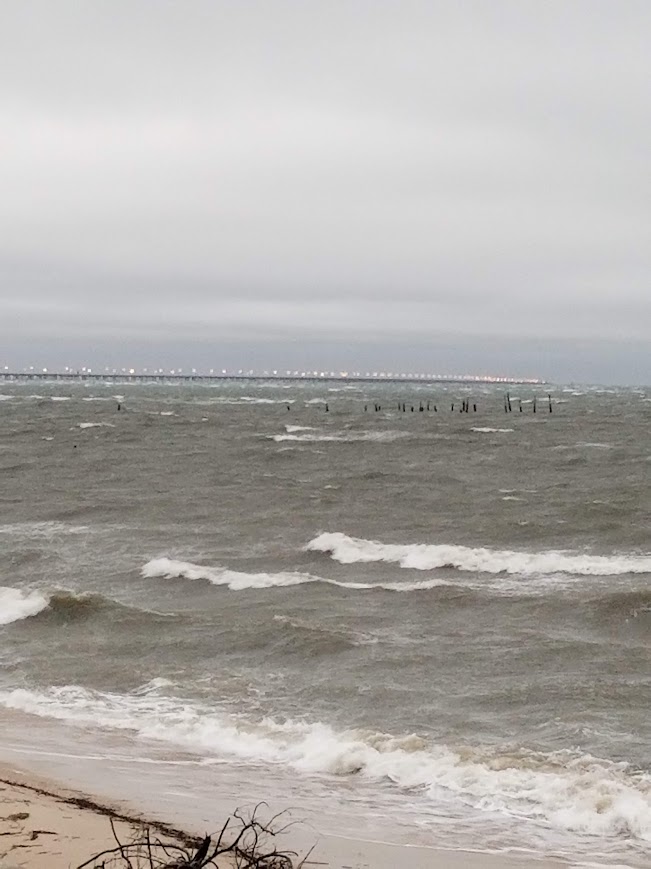
I absolutely loved the experience of traveling on two wheels to visit family, former students, and friends (both from my youth and from my middle-aged ventures in the world of spoken Latin). When I watched Long Way Round and its sequel, though, I decided that riding trails and unpaved roads held even more potential enjoyment on such journeys. In comparison, riding evenly-surfaced paved roads, paradoxically, made me feel somewhat stuck in a rut.
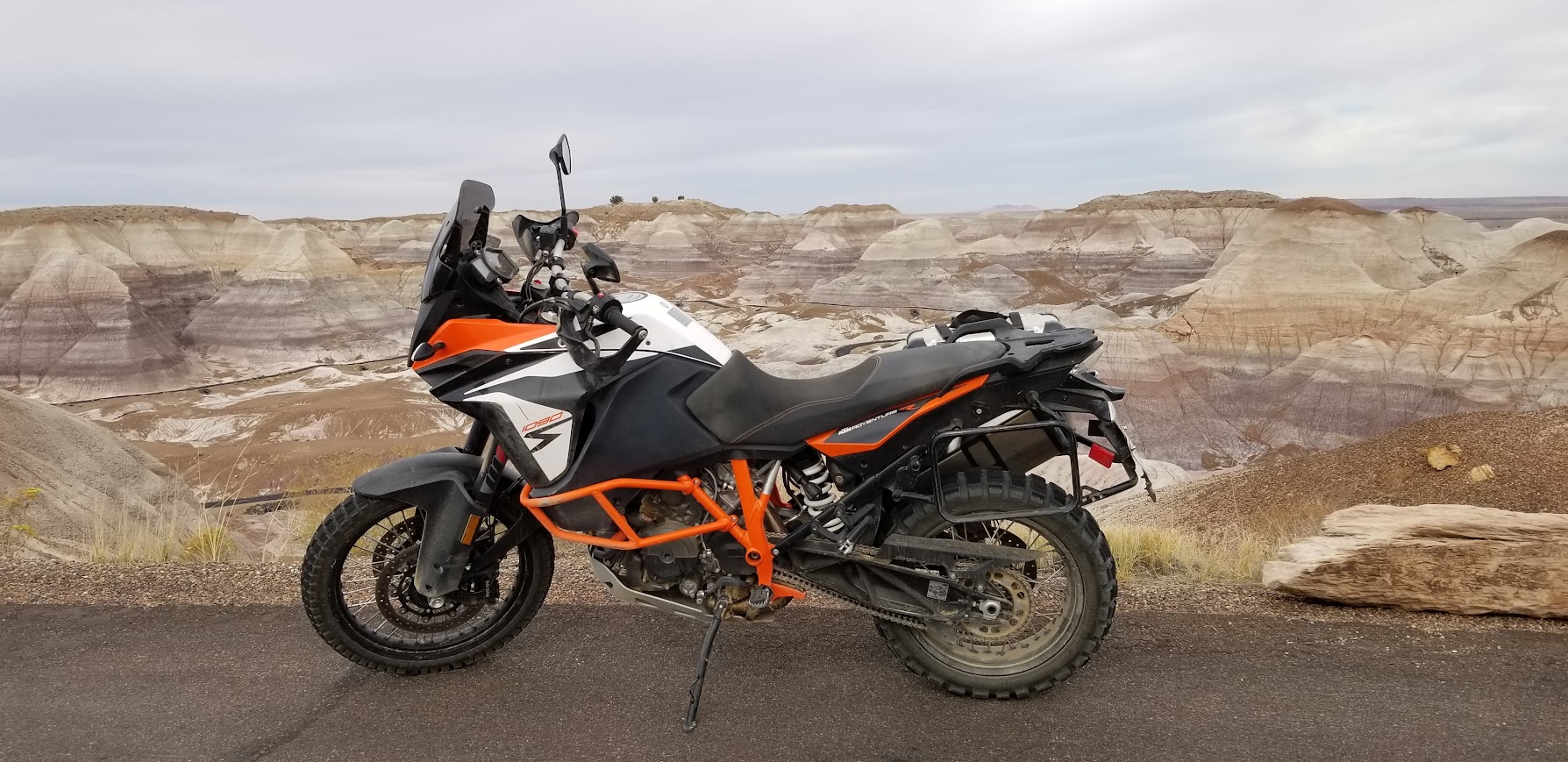
In the fall of 2019, I rounded out my research (reading, viewing, etc.), and bought a spanking new motorbike capable of both on- and off-pavement adventures. I didn’t go for the BMWs that Ewan and Charlie ride in the first two films. Instead I chose a 2019 KTM 1090 Adventure-R and begin outfitting it with the accessories for luggage and crash protection that one needs in order to make off-pavement travel feasible. I rode just a very little before COVID shut the world down and very little after, for a time. Until summer of 2021 I stayed mostly on pavement as my research had not included careful study of the different techniques one needs to employ on uneven terrain where traction may be scarce and obstacles may abound.
Even so, I quickly came to learn that the 1090 is a beast. It is tall, with a higher center of gravity than my cruiser. Mounting and dismounting required more grace and inseam than I possessed, and I was not able to stand with both feet flat on the ground when astride the seat. The 1090 is heavy, about 600 pounds with essential accessories. These bikes, especially when outfitted with protective plates and guards, are designed to withstand impacts from falls (inevitable even for skilled riders), but they are no fun to return to vertical once they go down. Suffice it to say that they can be as much bruisers as cruisers. And my 1090 quite literally gave my lower legs plenty of bruises, even before I took it onto the farm roads of southwestern Kansas or the service roads in the forests of Colorado. On account of the bike’s propensity to leave me black and blue, I named ‘him’ Mongo, after the lovably overpowering character from Blazing Saddles.
Training 1, Round 1
I attempted independently to build the skills necessary to ride Mongo both safely and how/where ‘he’ was designed to roll. Those attempts proved inadequate. I therefore found and booked a training opportunity for the end of October, 2021. It seemed the perfect opportunity, I hypothesized that the worst of the COVID pandemic was in the rearview, that the year’s crops would be in the bin, and that it would be offer much-desired opportunities for travel after 18 months of sticking close to home. The training included two days of focused skill-building and practice, and I chose to build upon them by signing on for a five-day guided ride in the northern reaches of Baja California.
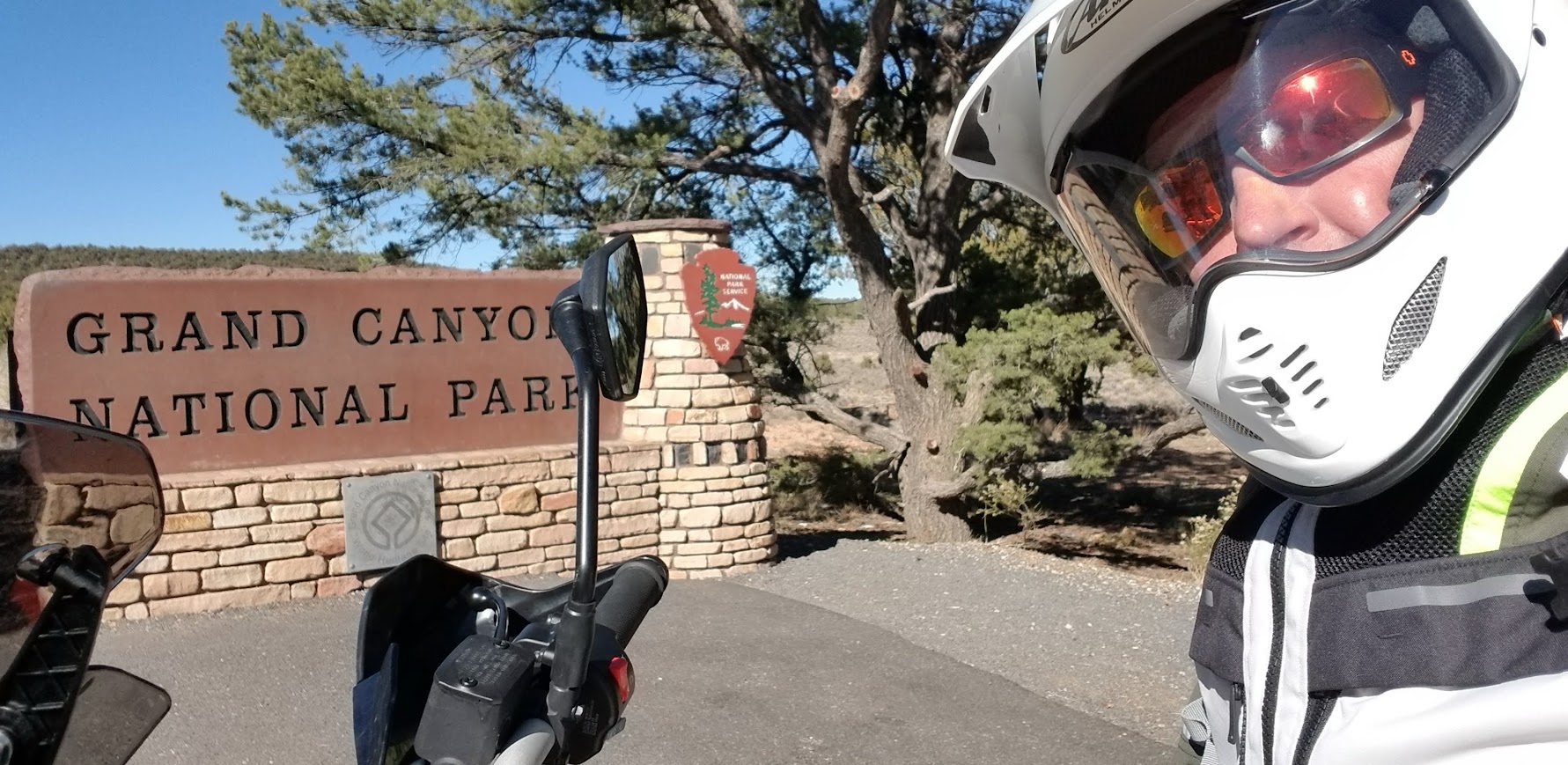
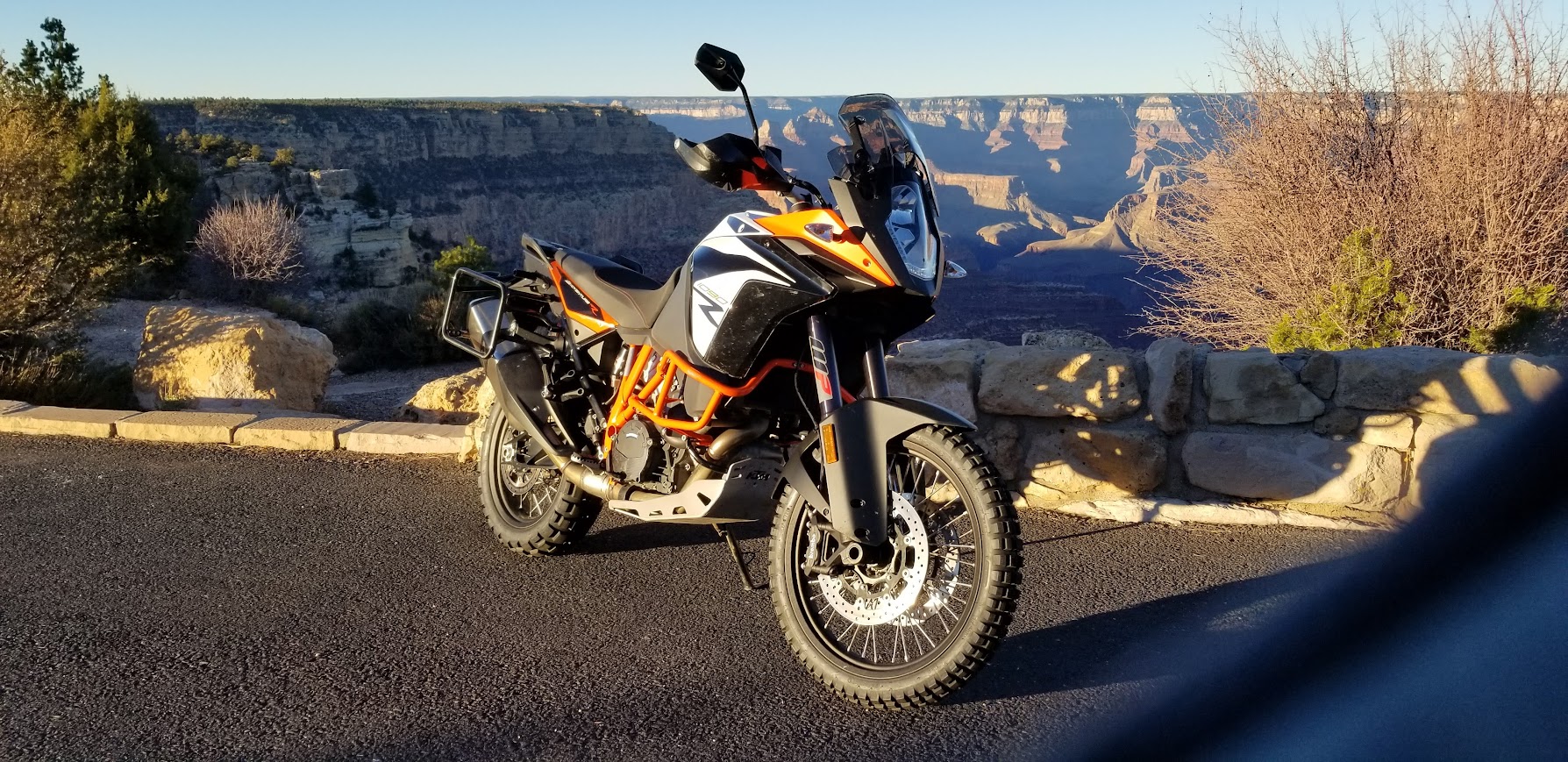
The training occurred just outside Borrego Springs, CA. I had trailered Mongo there with a stop for a terribly brief ride along the paved roads of the Grand Canyon’s South Rim.
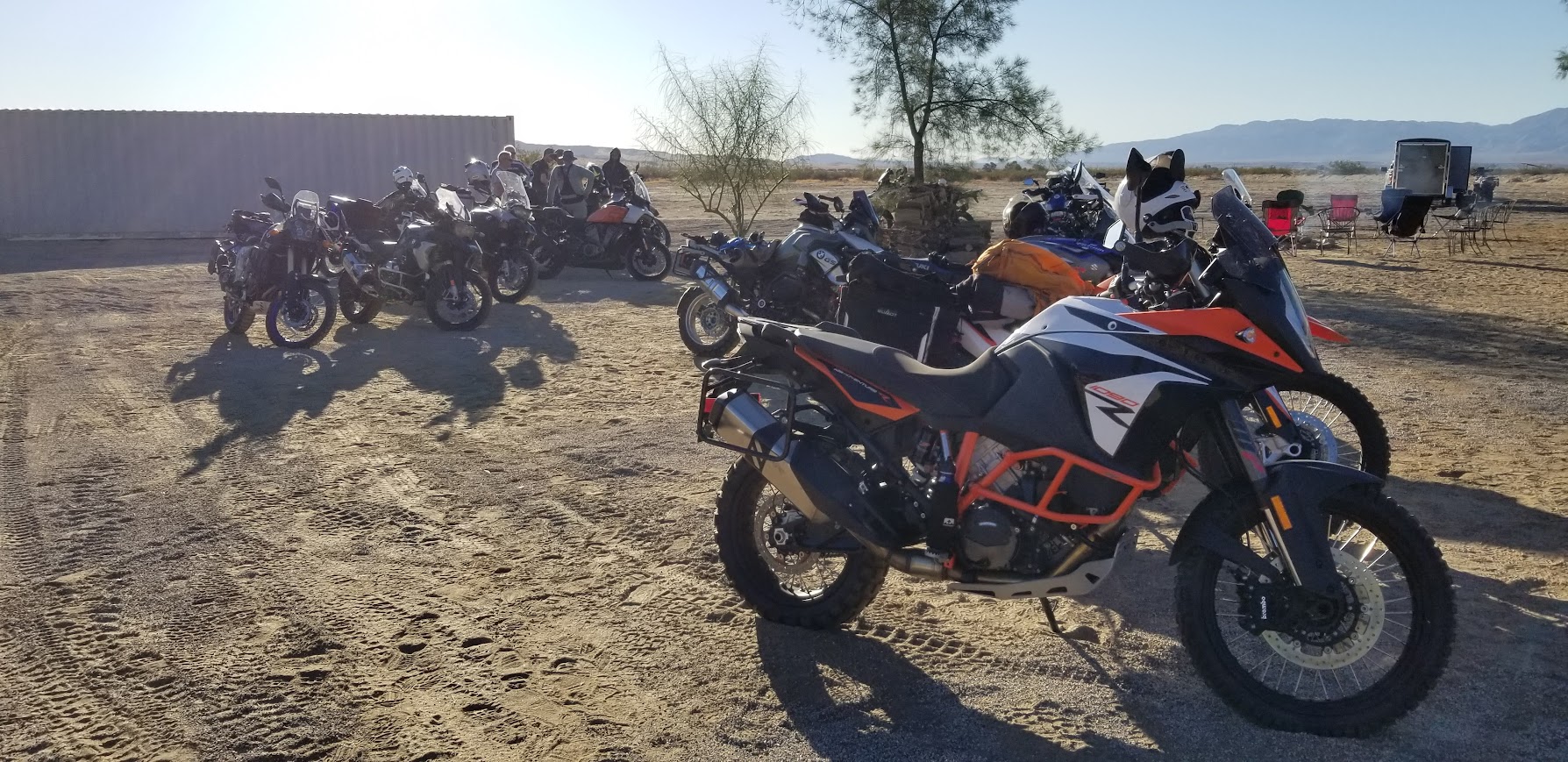
The level-one course was a good beginning in skill-building, with knowledgeable and attentive coaches who helped me to gain abilities and confidence, even as I struggled with the trickier skills, e.g. riding in sand. Five months after my retirement from the Latin classroom, I had begun physical training at the gym, and was living a healthier life, but I found myself fatigued after each day’s riding. It is safe to say that my skills, stamina, and confidence were on the trail to improvement, but I did not maximize the benefit that I might otherwise have gained from the two-day course.
Upon completion of the training, fifteen or so of us made the ride into Baja through the crossing at Tecate. Our group included four coaches, plus a fifth driving the support truck which would follow or meet us at each of our nightly stops. The first day’s ride included some pavement, but was about 50% on dirt, including a fun little stretch of sand. I managed that just fine. A portion of the group split off on the second day for an extra-challenging dirt section and had quite the adventure. I was content to stick to the milder dirt and some pavement for an easier day, getting to our hotel/restaurant lodging in time to enjoy the legendary margaritas with a view of the Pacific.
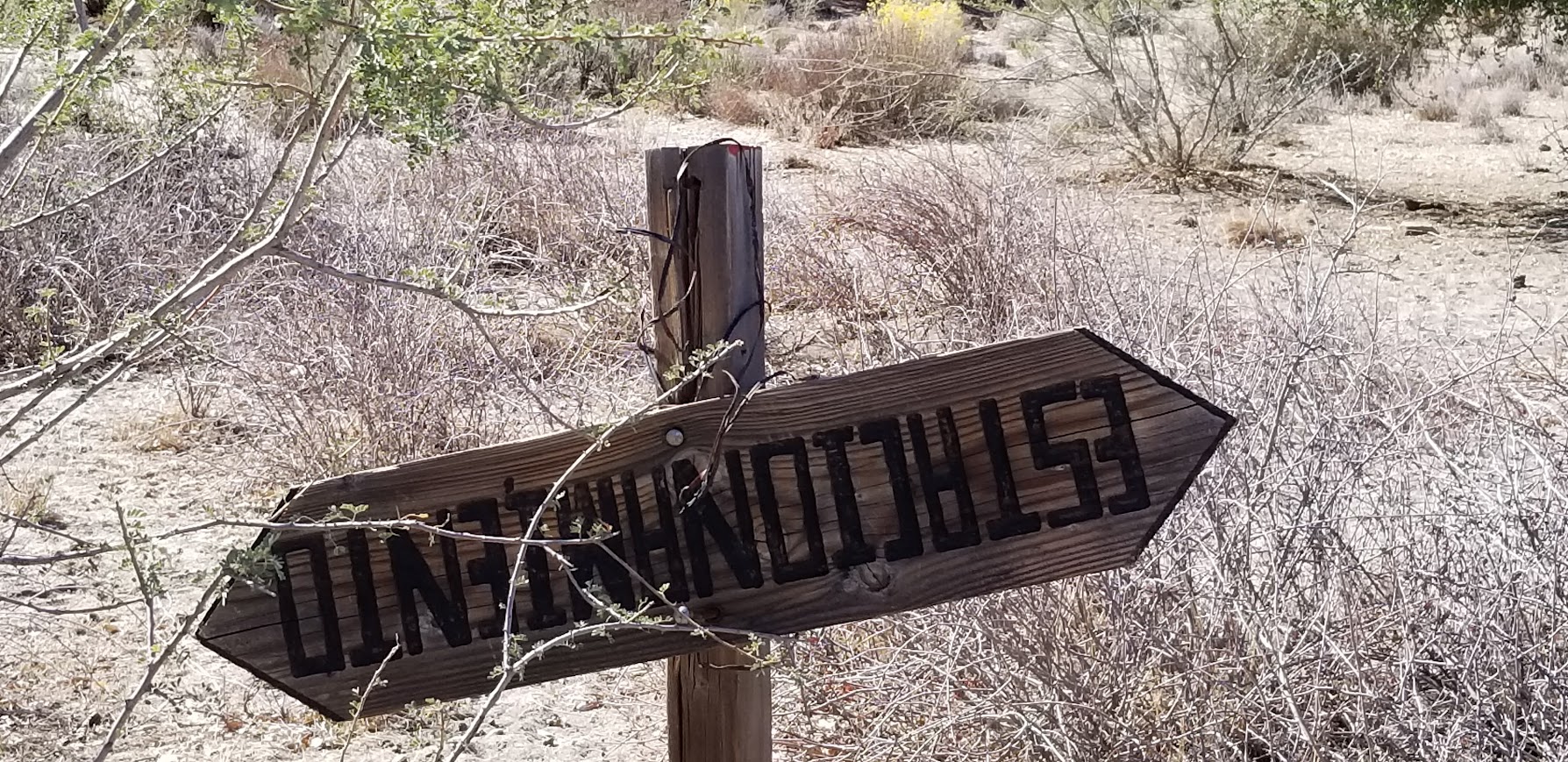
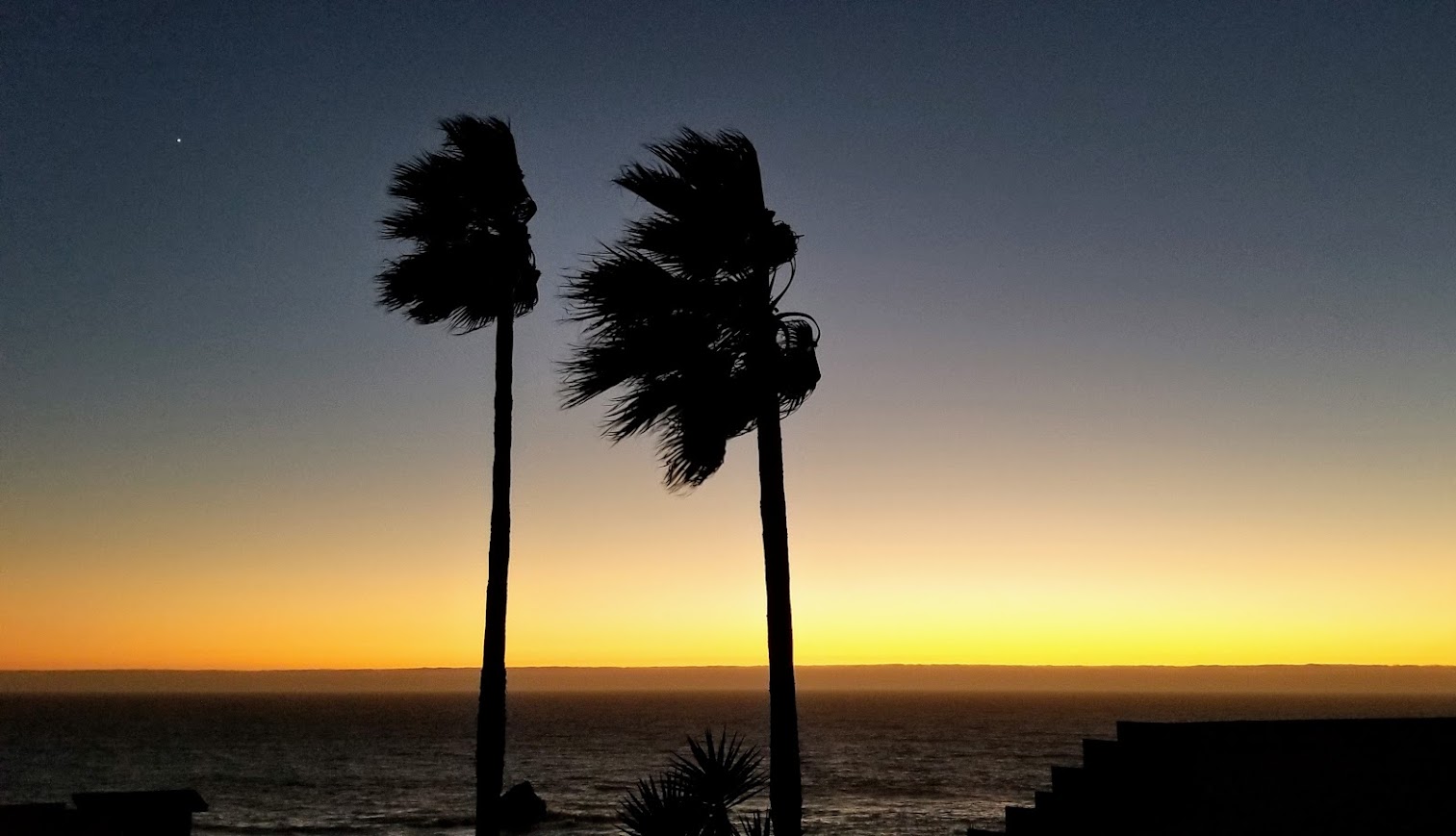
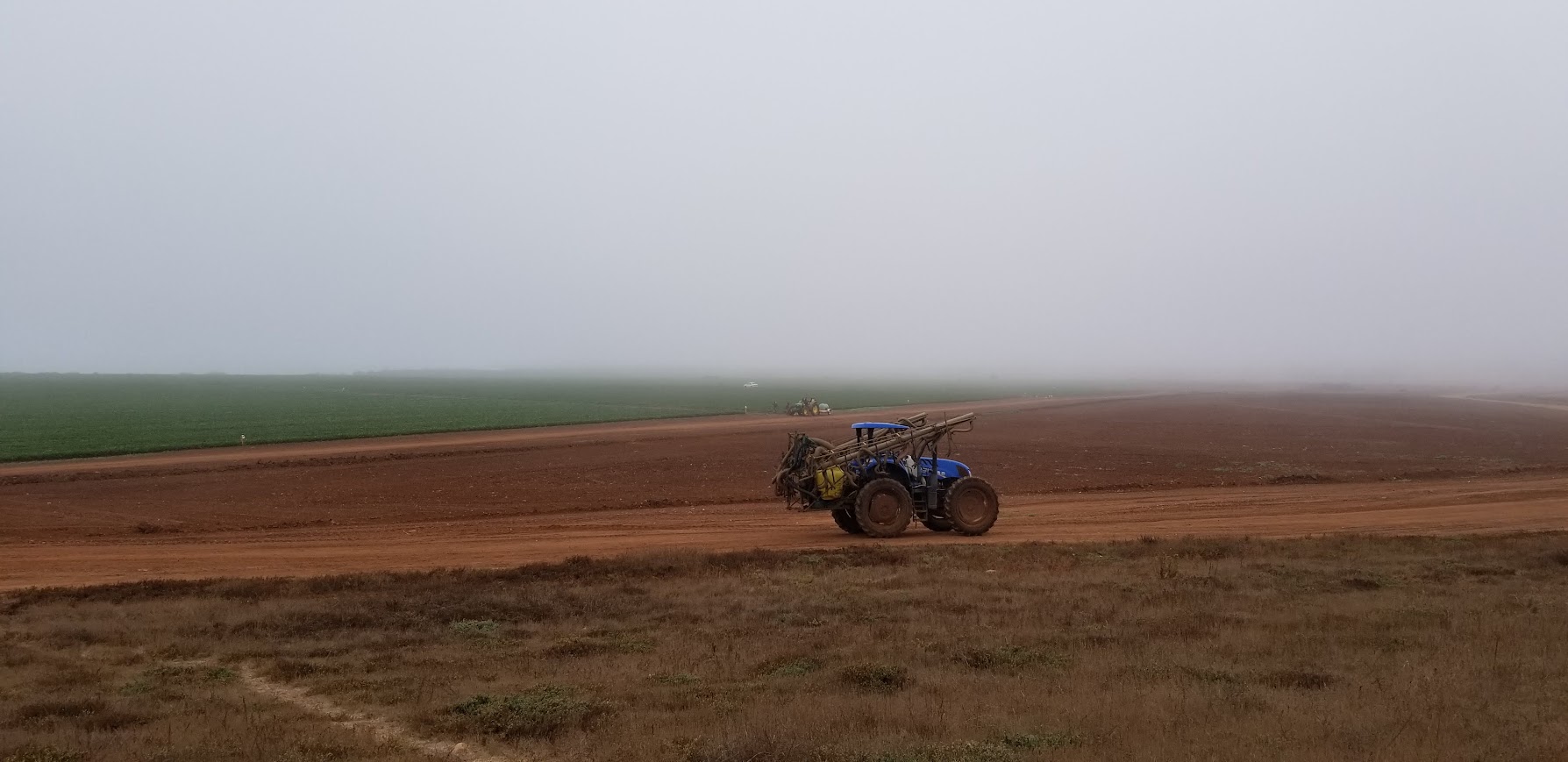
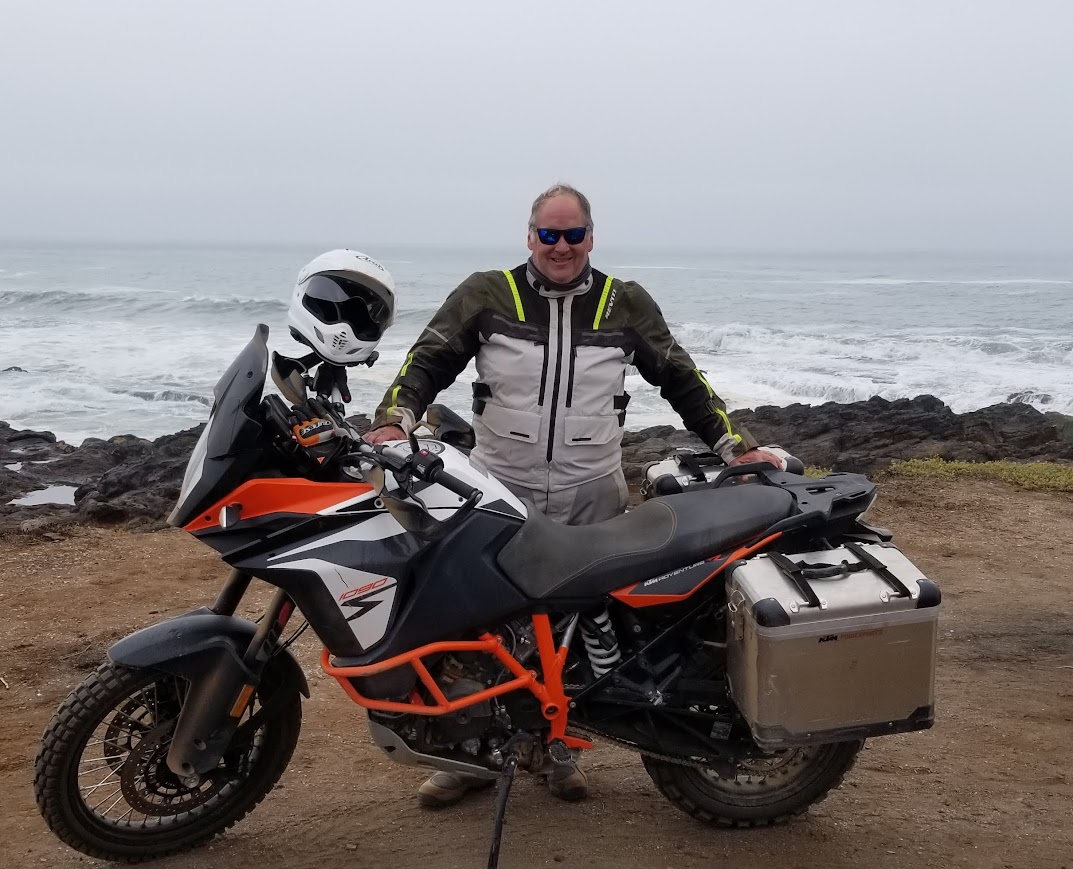
The third day offered some unexpected surprises for everyone. The marine layer over the coastline (at Ejido Eréndira) made for a chilly start to the day, and heavy surf and high tides (see video) made a rip down the beach inadvisable. When we turned east to head for the central mountains of the peninsula, we found the dirt roads to be in very rough condition. Drought, sporadic heavy rains, overuse, sporadic maintenance, all of these are recipes for ruts, soft spots, debris accumulation, and general degradation, whether on the farm roads of southwestern Kansas and southeastern Colorado or between the isolated inland communities of Baja California. And on the forest roads of Colorado and in Mexico, high-speed, high-traction four-wheeled OHVs (sometimes called side-by-sides, aptly branded as RZRs (pronounced razers: they have the tendency to raze the roads, diminishing their rideability for those coming after). A section of our route that day had been included in the course of that year’s Baja 1000 race. The race itself wasn’t set to start for another 10 days, but teams were pre-running it as practice. And they were running it in the opposite direction to our group’s. We all were able to avoid the handful of RZR-type vehicles that we encountered, I am happy to say.
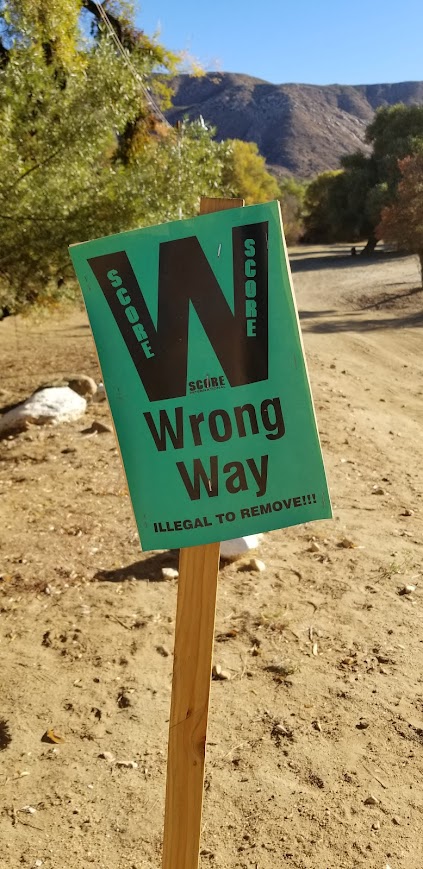
The greater hazards came from the road itself. Steep sections, exposed rocks (loose and anchored), sandy patches, and ruts had many of us riding with higher stress than we’d intended to experience. Three of us went down hard. As for me, I can now claim that I’ve found and fallen in the ruts of both ‘Merica and Mexico. No matter their location, they only get deeper as water gathers in them. Tires moving through their soft, wet bottoms carry more soil away. Rinse and repeat. When drier conditions prevail, the deeper ruts collect debris (often sizeable rocks). On a motorcycle, I will try to keep my tires out of ruts, both, because of that debris, and because tires can grab the edges of the ruts. The varying effects on momentum, balance, traction, and steering control are complex, sometimes to the point that bike and rider fall.
This rider did so in Baja. I was moving too fast on a curve, found a rut in it, braked incorrectly, and after a split second of air time, down we went. My helmet found a rock on the banked outer edge of the curve, and Mongo found a resting spot with the lower portion of my left leg under ‘him.’ Tom, one of the coaches, found me that way, and before long had shifted Mongo offto free my leg. My riding gear had protected it well. My helmet protected my head, too. I regained consciousness without knowing that I had passed out. Right away I could recall the crash up to the point of my impact.
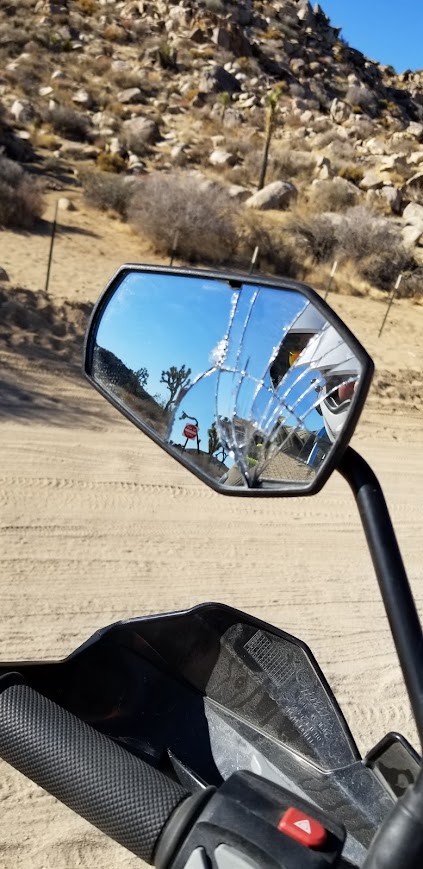
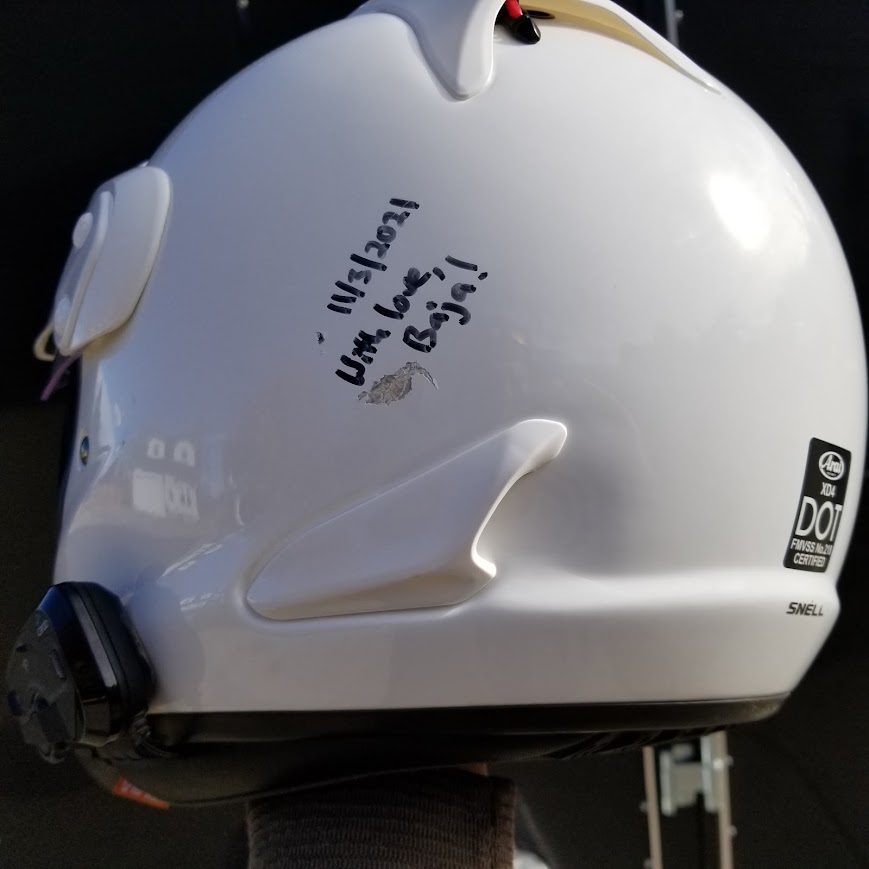
As I stood up and began moving about, helping Tom to get Mongo upright and assessing damage to ‘him,’ I felt good about getting back on the road. By that time, other riders had passed (when it was safe to do so), and the support truck had caught up with us. Cassie, the coach driving the truck, and Tom both encouraged me to take some water and as much time as I needed. I did so, then signaled my readiness to proceed. I wanted to thank them both for their help and concern, and it was at that point that I realized I had a problem: I could not retrieve their names. Nor could I remember the names of any of the other people on the ride.
It was clear even to me that I should not get back on Mongo. Cassie and Tom loaded ‘him’ onto the support truck, and I took my spot in the cab. Within about 30 minutes I was able to recall everyone’s names, to my great relief. Before the day’s ride to Mike’s Sky Rancho was done, two other riders wound up with me in the truck. Tom, Chris (coach), and Dusty (owner and head coach) ended up shuttling the other bikes up to the Rancho. Everyone on the coaching crew went above and beyond that day!
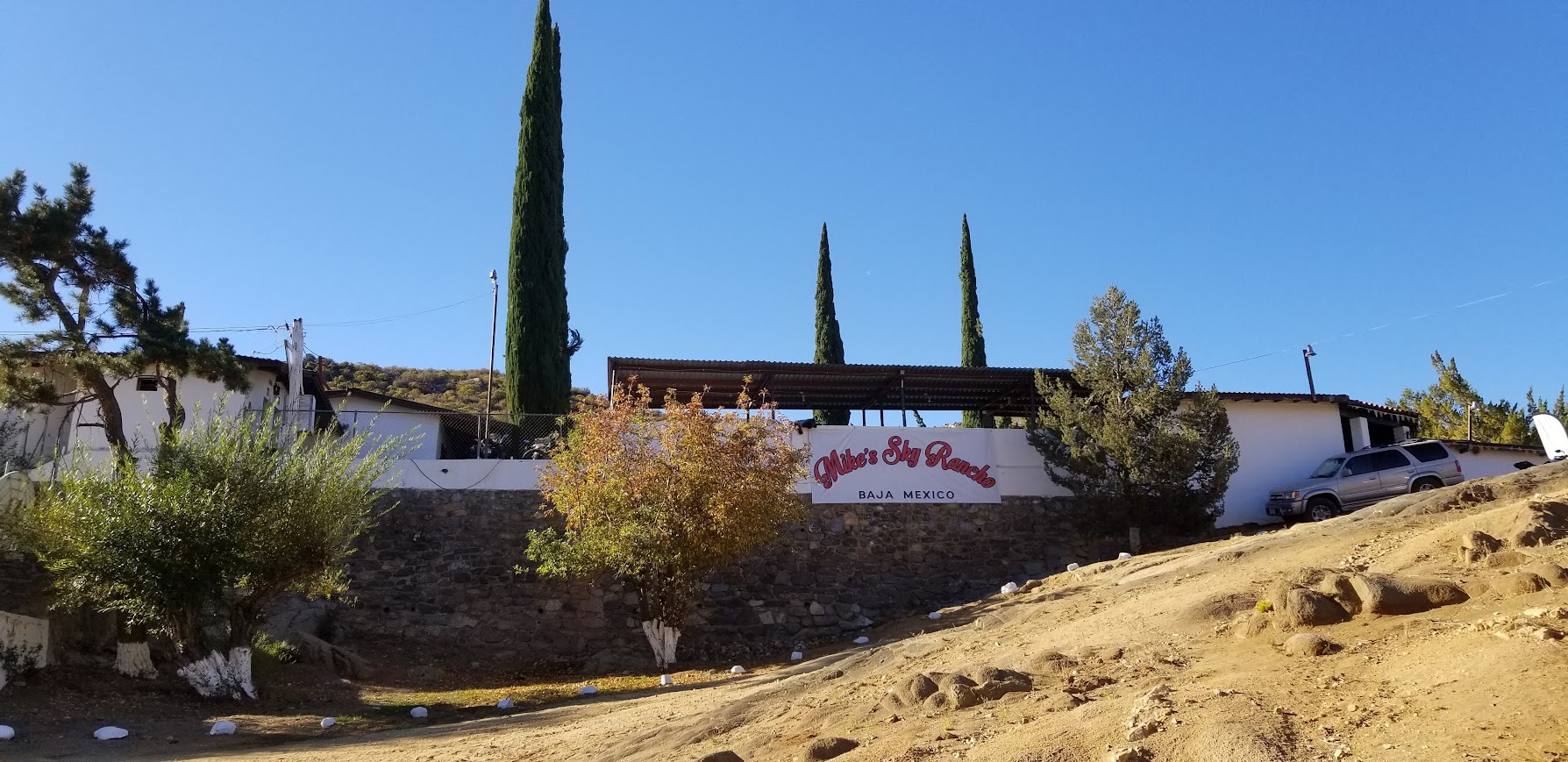
The next day, the coaches shuttled the three bikes down until they reached pavement in the nearest town. The three riders with injuries (Don’s cracked ribs, Ted’s fractured ankle, and then my big ol’ melon) all felt well enough to ride on pavement, but we rode in the truck until then. Everything went smoothly, and we were able to get back through the border crossing at Mexicali and thence head homeward.
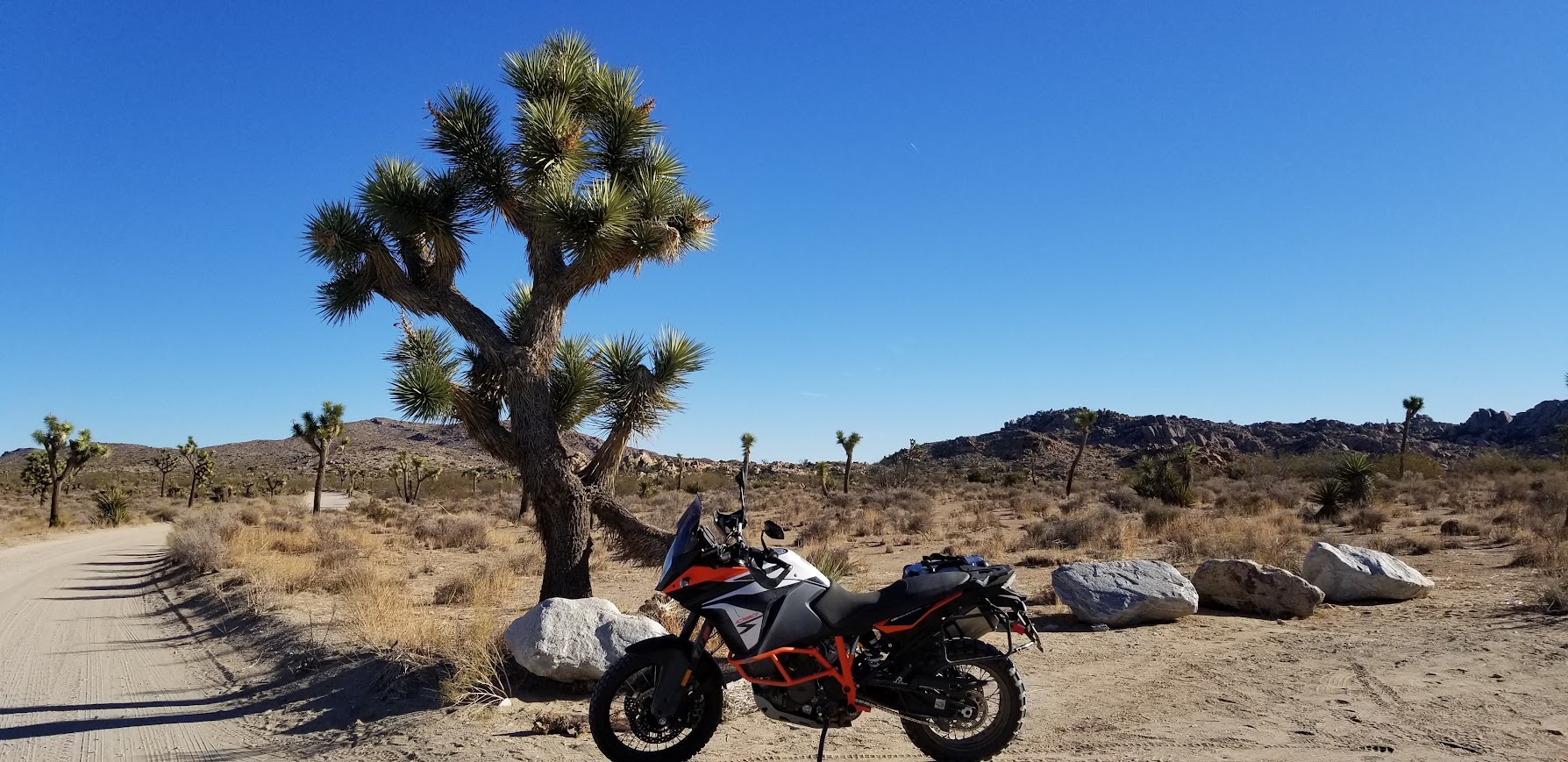
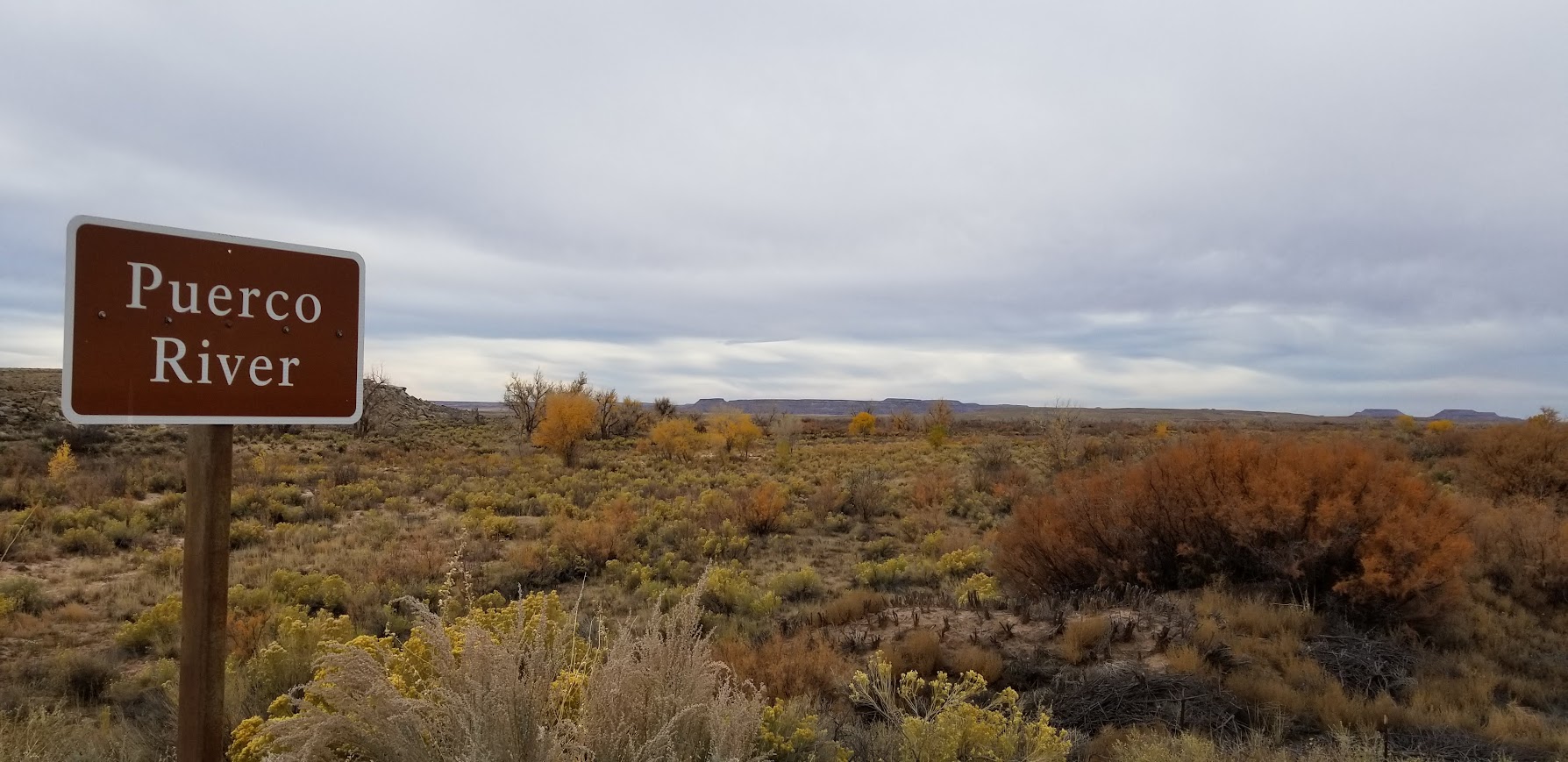
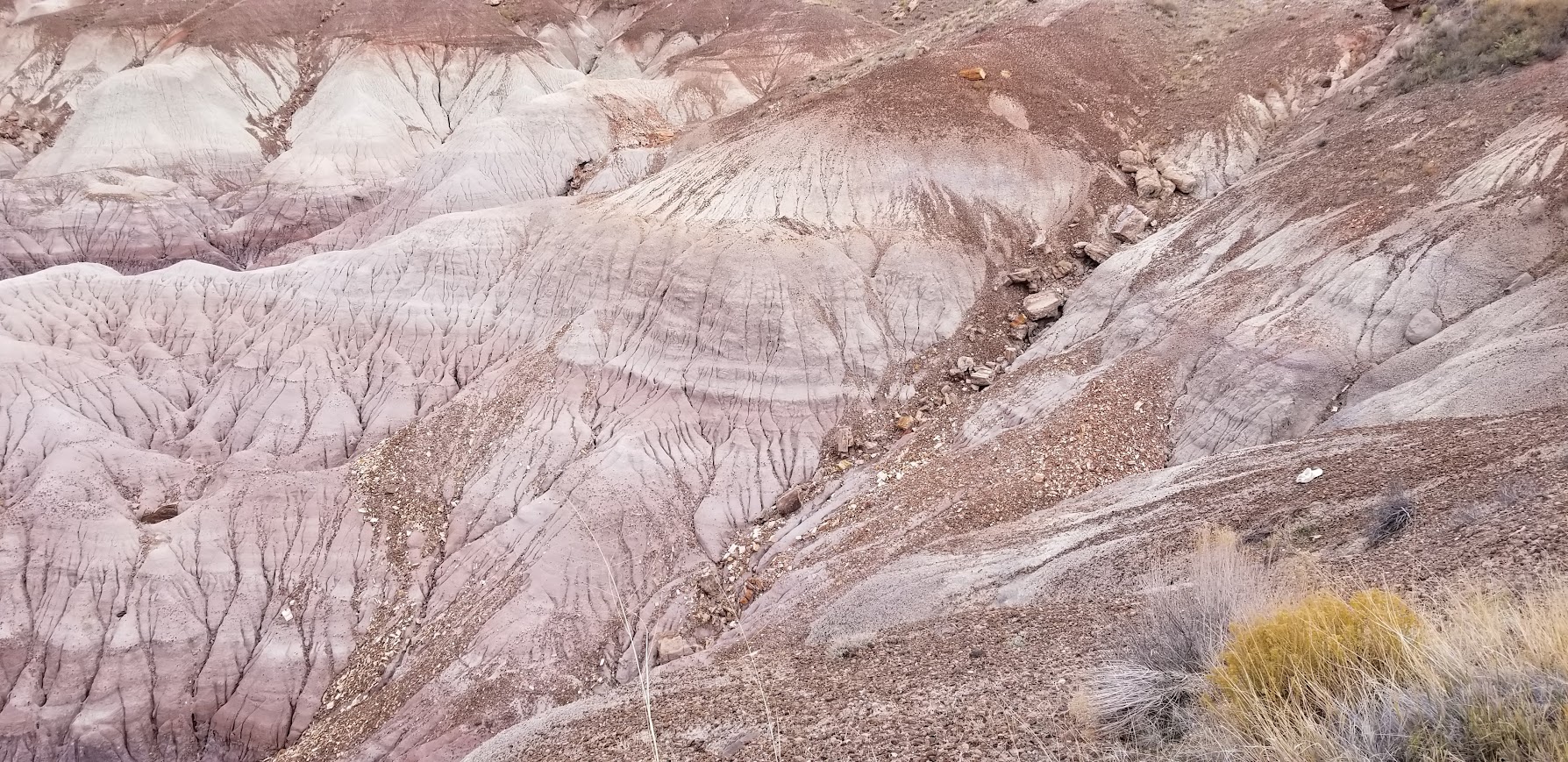
I took my sweet time before returning to Colorado, visiting with my niece for a November weekend in nearby Palm Desert. Our first reunion since the start of the pandemic! Once I started east and north, I couldn’t resist a couple stops to unload Mongo and take in some of the roads and sights in Joshua Tree and Petrified Forest National Parks. Once home, aside from one local trip on a sunny Veterans Day, Mongo spent the winter in the garage, while I set about getting a new helmet and some replacement parts. And given that I clearly needed it, I also began planning my next opportunity to take a training! As time passed after my return to Colorado, my brain felt (to my conscious mind, at least), to have recovered fully from my crash. Subsequent events proved that it was still recovering.
My helmet had protected my skull, but my brain had sloshed within it, rapidly bounding from below and behind my left ear to above and just in front of my right. When soft tissue met bone, there was enough of an impact to produce some bleeding from the finer vessels which nourish the cerebral tissue. The bleeding apparently stopped pretty quickly, but the released blood pooled up there between the brain itself and the protective dura mater which sheathes it. Such un-resorbed blood is called a subdural hematoma. Under ideal conditions, the leaked blood is slowly taken back up and everything is good.
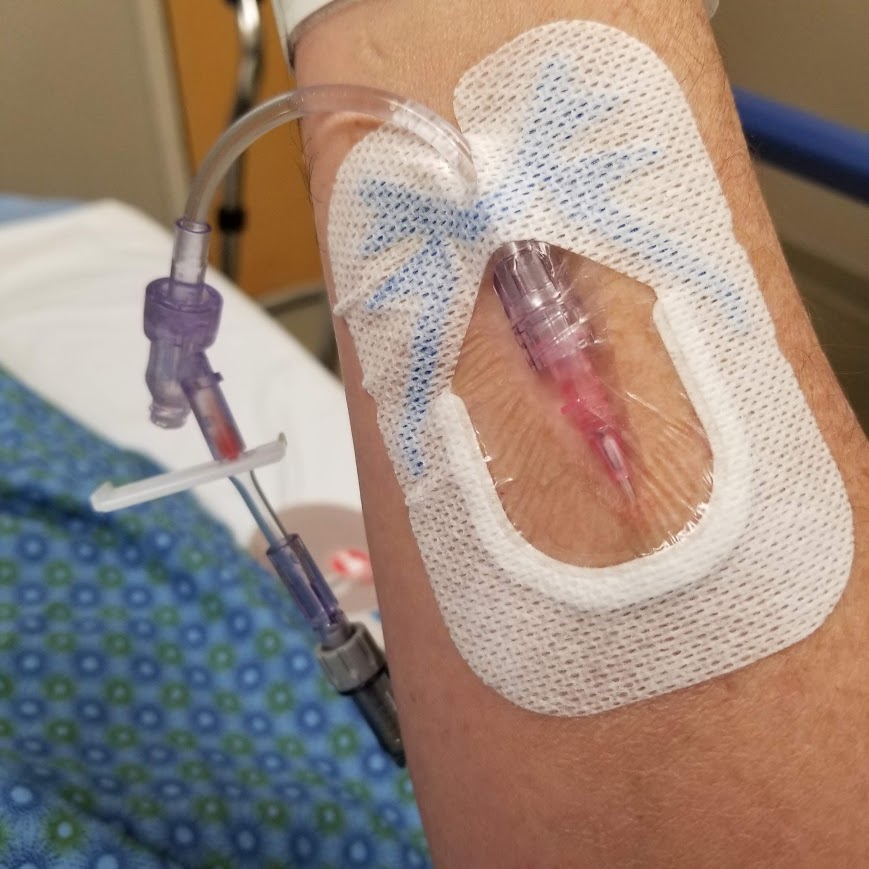
At other times, the hematoma irritates the brain tissue and produces neurological symptoms which can be similar to those of a stroke. By the end of November, I had returned to the gym and still felt good. In mid-December, the workouts began featuring impact-heavy moves (jumping rope, jumping up onto to a raised wooden box, etc). I began having neurological symptoms, and consulted about them with my doctor. When they reoccurred on Christmas Day, I went to the hospital and was admitted. I was discharged the next morning with clearance to walk and do zero-impact exercise, and to return for a CT-scan to monitor shrinkage of the hematoma.
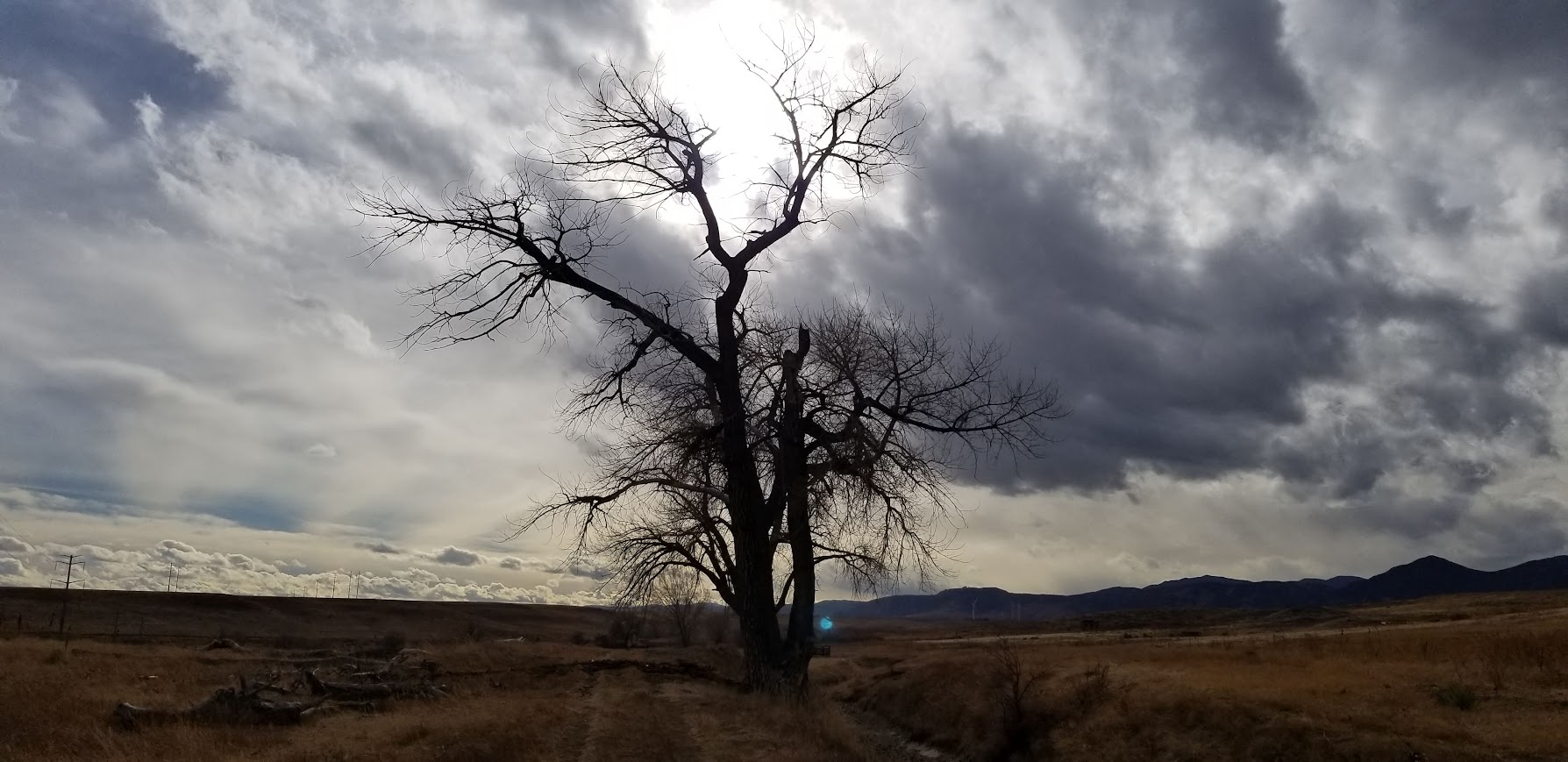
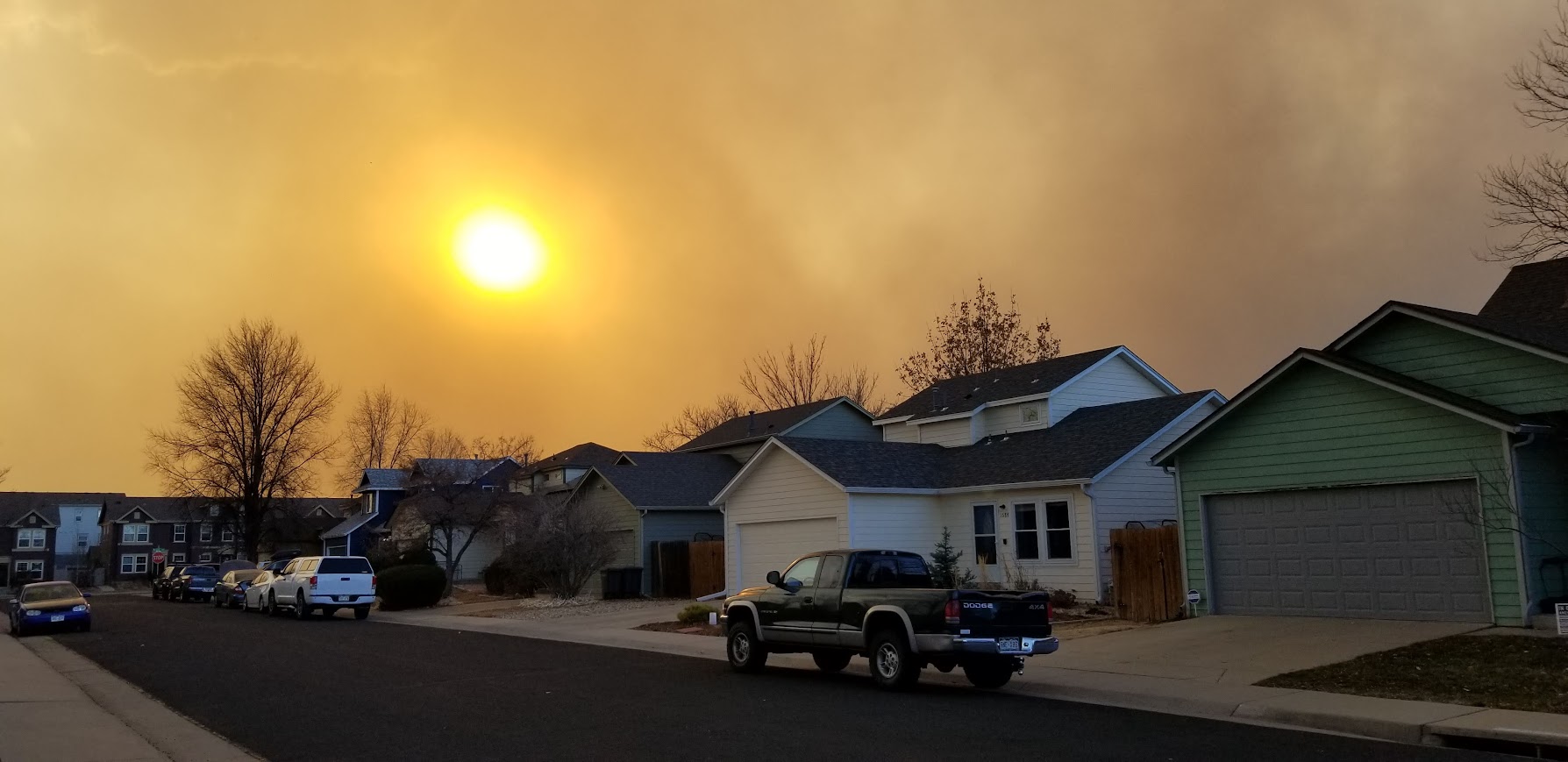
Training 1, Round 2
I recovered fully and with no permanent damage done, I am grateful to say. But the bit of medical scare reinforced my need to seek more supervised training if, as intended, I was to return to riding off pavement. By February, I had booked my next training event. I decided to repeat West 38 Moto’s Level 1 course, this time taking an offering the weekend of Memorial Day, 2022 in Cloudcroft, NM. The location was closer to home than the earlier spring offerings in California and Arizona, and I would enjoy some easy highway travel to get there. But if you know anything about the happenings of late spring of 2022 in New Mexico, you know that the multi-year drought burst into numerous destructive conflagrations. A badly mismanaged controlled burn was devastating the north central part of the state, and other fires were in progress or feared. In south central NM, the Forest Service closed public lands around Cloudcroft as dry and especially windy conditions added to the threat.
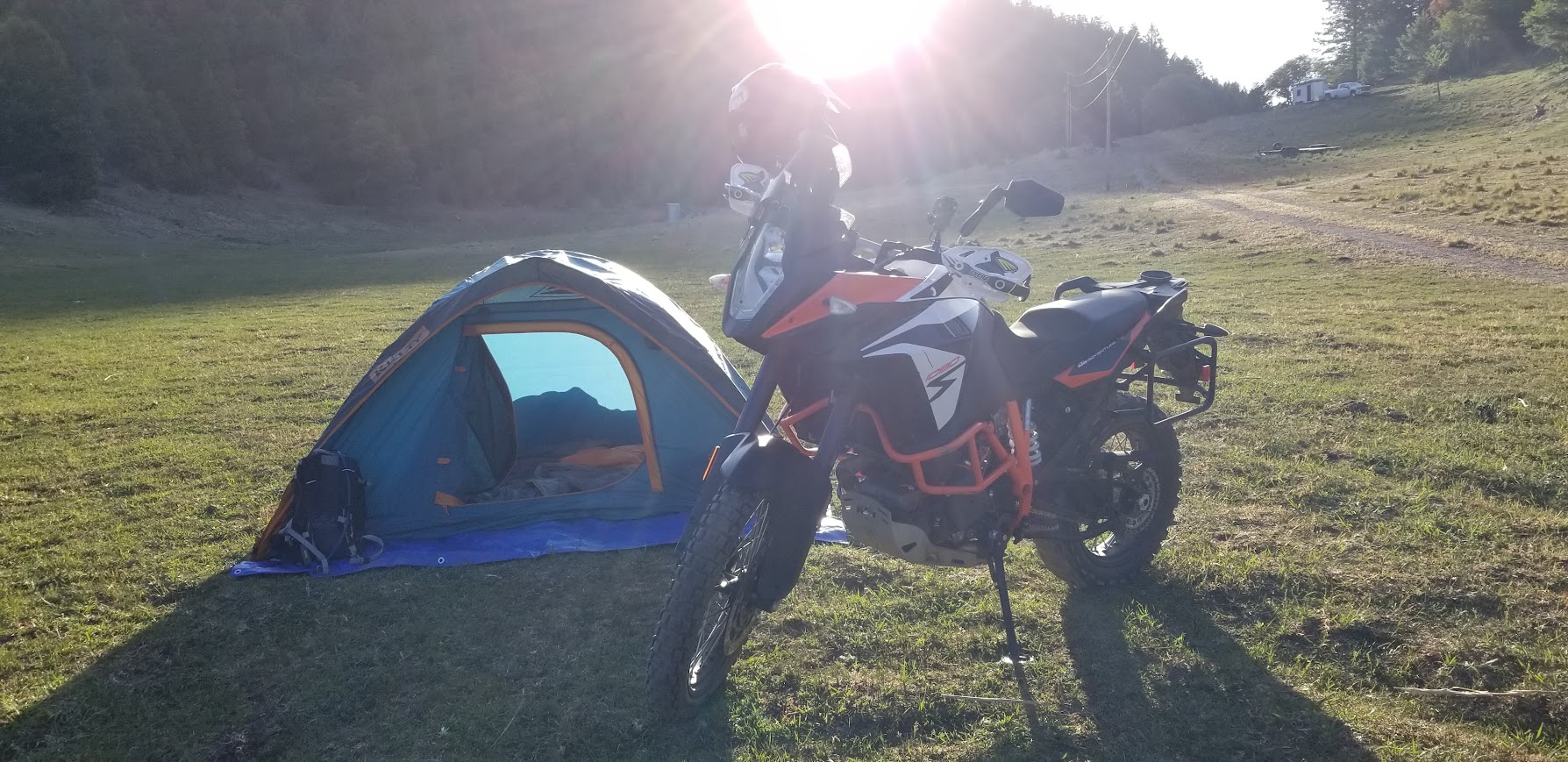
Our training went ahead on private property, where we adhered to the fire ban and shivered in the colder hours of the night. We ventured out onto open county roads (nicely groomed dirt), but stayed off the service roads in the forest in ready compliance with the closure. It was a good training, I was in better physical shape, and I feel that I got as much out of it as was possible. I met a new coach, Matt, but also got to debrief with Tom and Dusty. Tom in particular helped me reconstruct my Baja bajada muy rápida (very rapid descent, bajajaja!) by filling in some of the problematic gaps in my memory. We did atrail ride on day three, but the cold wind, the forest closures, and something in the air made me quite content to leave when it wrapped up.
That said, I left the training with increased skills and confidence, as was my goal. Both proved adequate when I put them to the test of a long solo ride in July. On my outbound trip, I worked in about 300 miles off pavement in Colorado, Utah, and California. The wilder dirt roads were at the start in Colorado, as I made my north from I-70 towards Steamboat Springs and thence to Vernal, UT. Within 15 miles of leaving I-70 in Gypsum, I found ruts, but approached them with less speed and greater ability. Mongo went down once, but I was able to step from ‘him’ to the road and keep myself upright before continuing the ride.
In this year of continuing drought, Mongo and I always seemed to be searching for water. (More photos from the segment of my route in Utah may be found this post from Dec. 6, 2023).
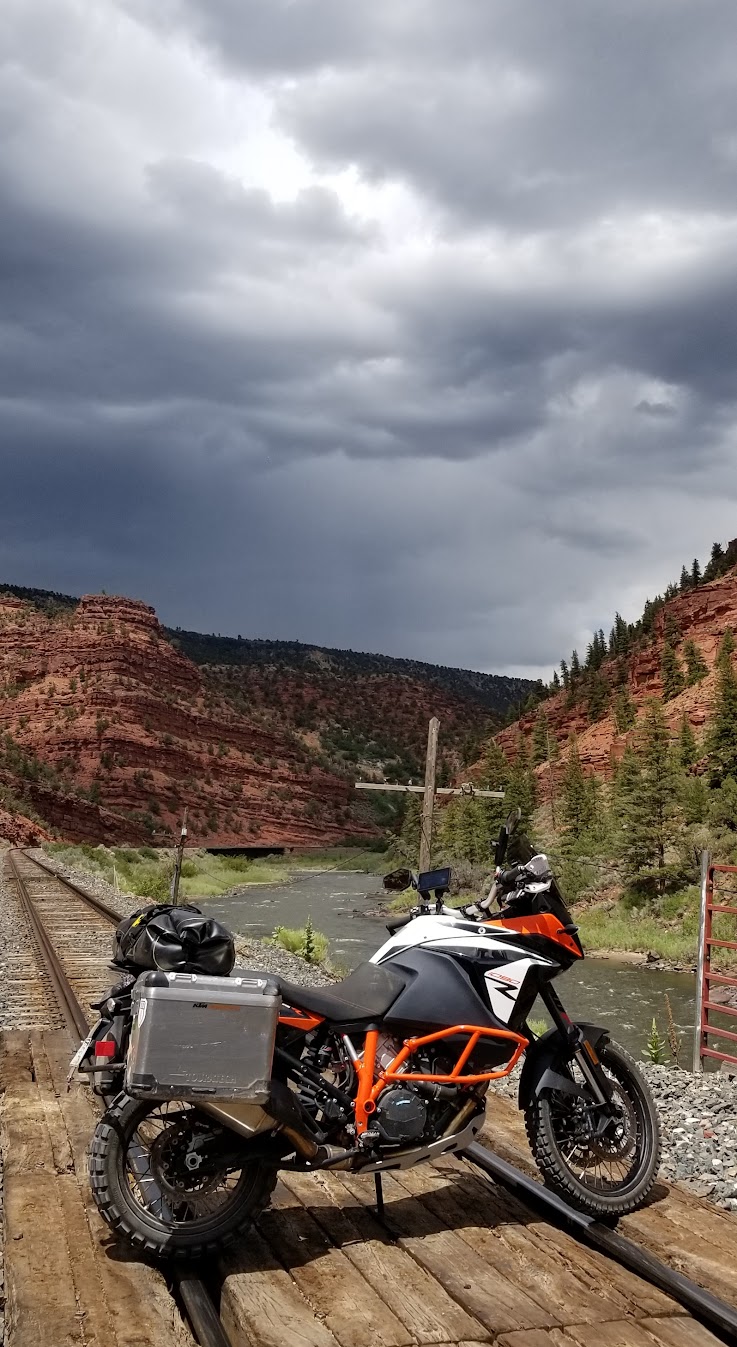
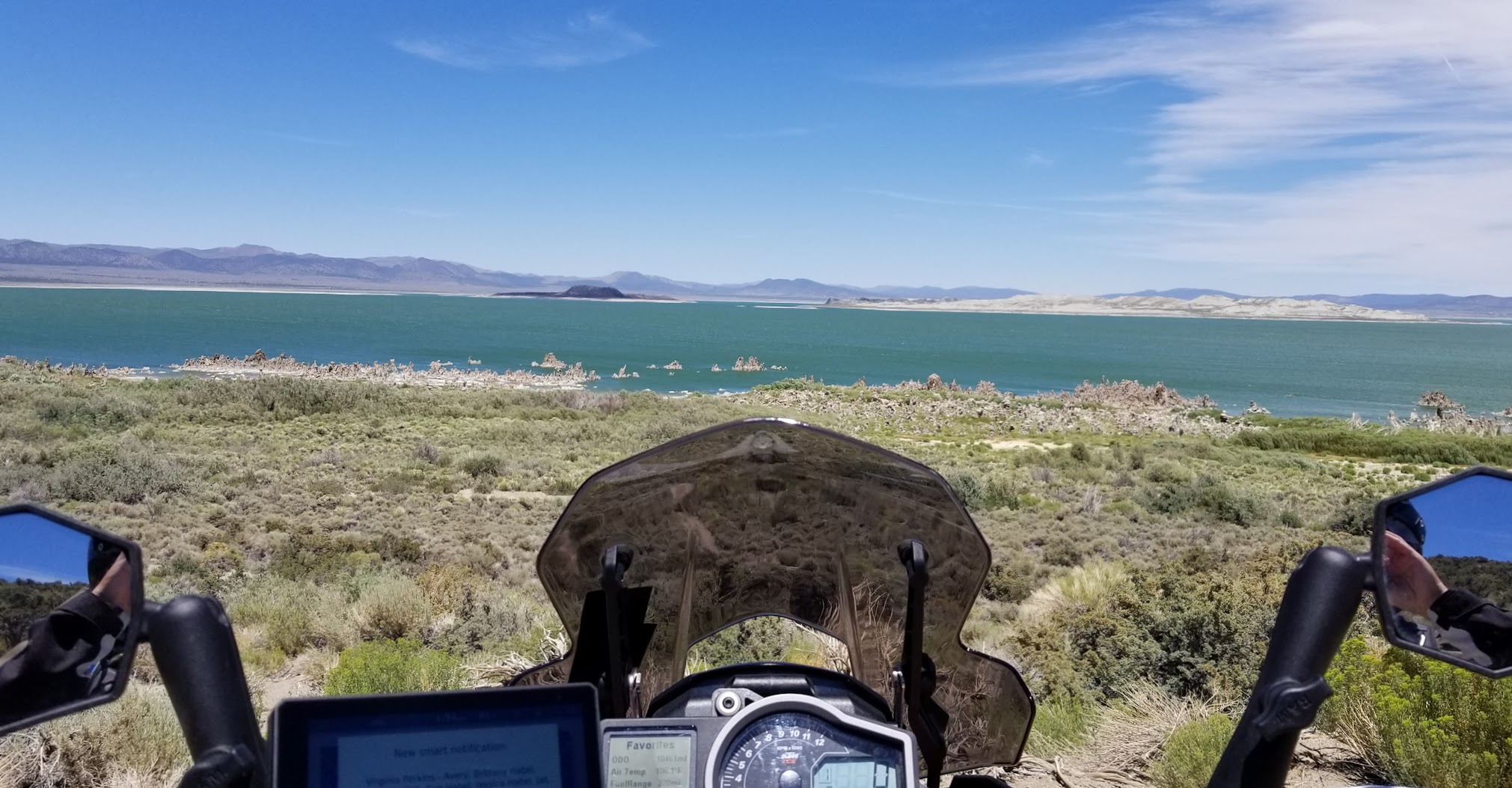
I spent a great week in Reno, NV with dear friends before pounding pavement back to Colorado. My goal was to do the trip (approximately 1,100 miles) in two hot days. It was over 100 degrees (F) for many of the 200 miles from Elko, NV to Salt Lake City, UT, and that contributed to the unexpected failure of Mongo’s electrical system. I rolled off a downhill exit ramp on I-15 as the sun was about to set. Two local motorcyclists saw me, stopped, and offered to help. We discussed likely causes and figured it might be the battery, which I had replaced just the year before (but that’s another story). As one helped hold tools and light while I removed the seat and extracted the battery, the other searched and called to locate an O’Reilly’s which had a replacement in stock. The old one was hot to the touch and swollen with expanded gas. (Fortunately, it eventually cooled and grew less deformed when removed from its housing and from its role in completing the bike’s electrical circuits.) Once I’d re-installed the seat and locked tools and gear in the side cases, we pushed the bike to an inconspicuous side street in the nearby industrial park. I thanked the gents who had helped me and told them I had it from there. The dead battery and I got a Lyft to the O’Reilly’s that had the new one, whence I returned to the bike, installed it, and breathed a deep sigh of relief as Mongo restarted. I looked at hotel options and decided that I’d ride a bit more in the cooler evening air, eventually stopping in Spanish Fork, UT for the night.
Late summer and fall of 2022 gave me more opportunities to ride. When his work schedule allowed, I rode with my friend Rob here in northern CO, and I had a number of solo trips to the farm ground as the fall crop grew and matured. Even with that riding, I knew that I would not be proficient without further guided practice and training.
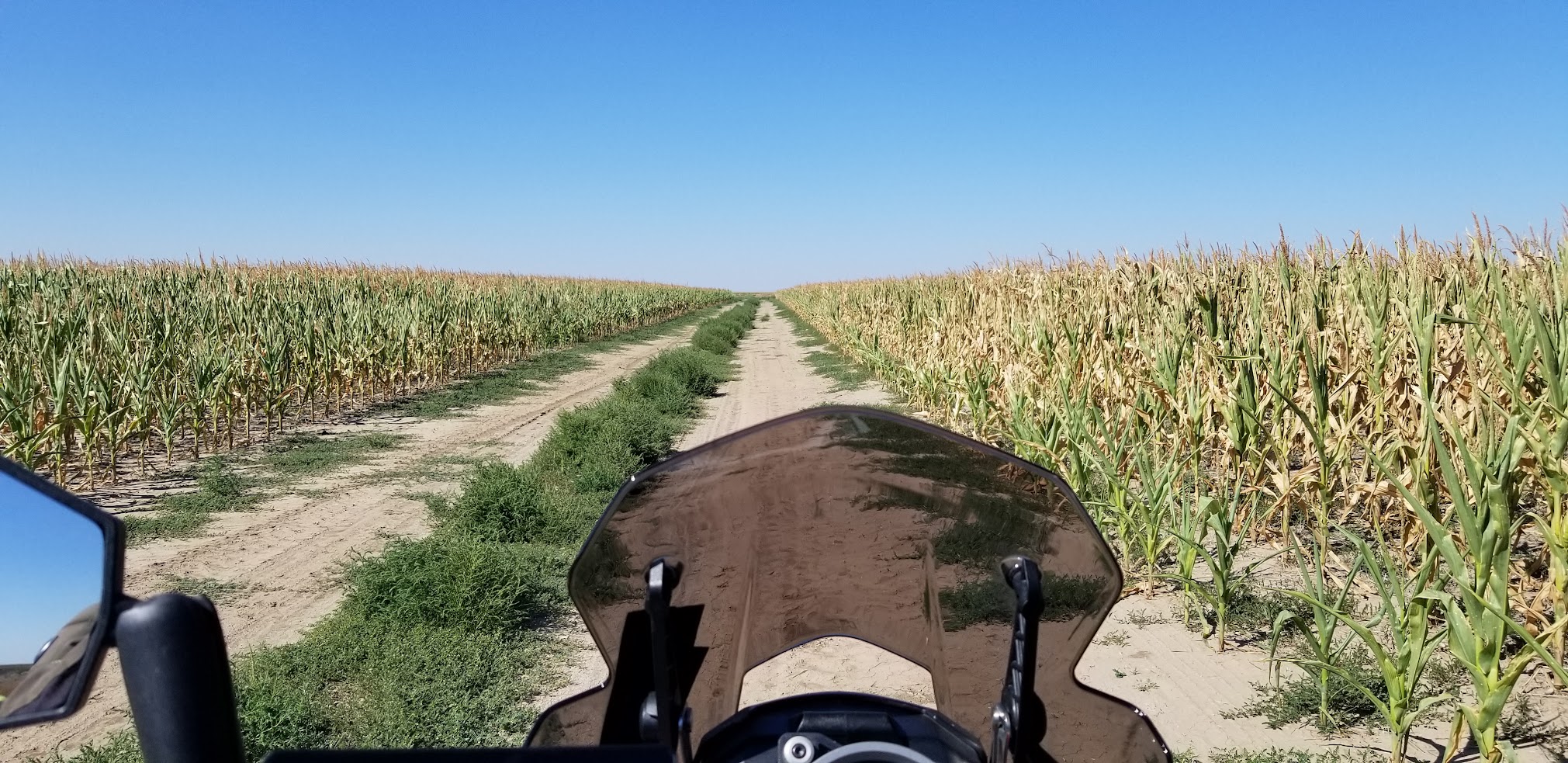
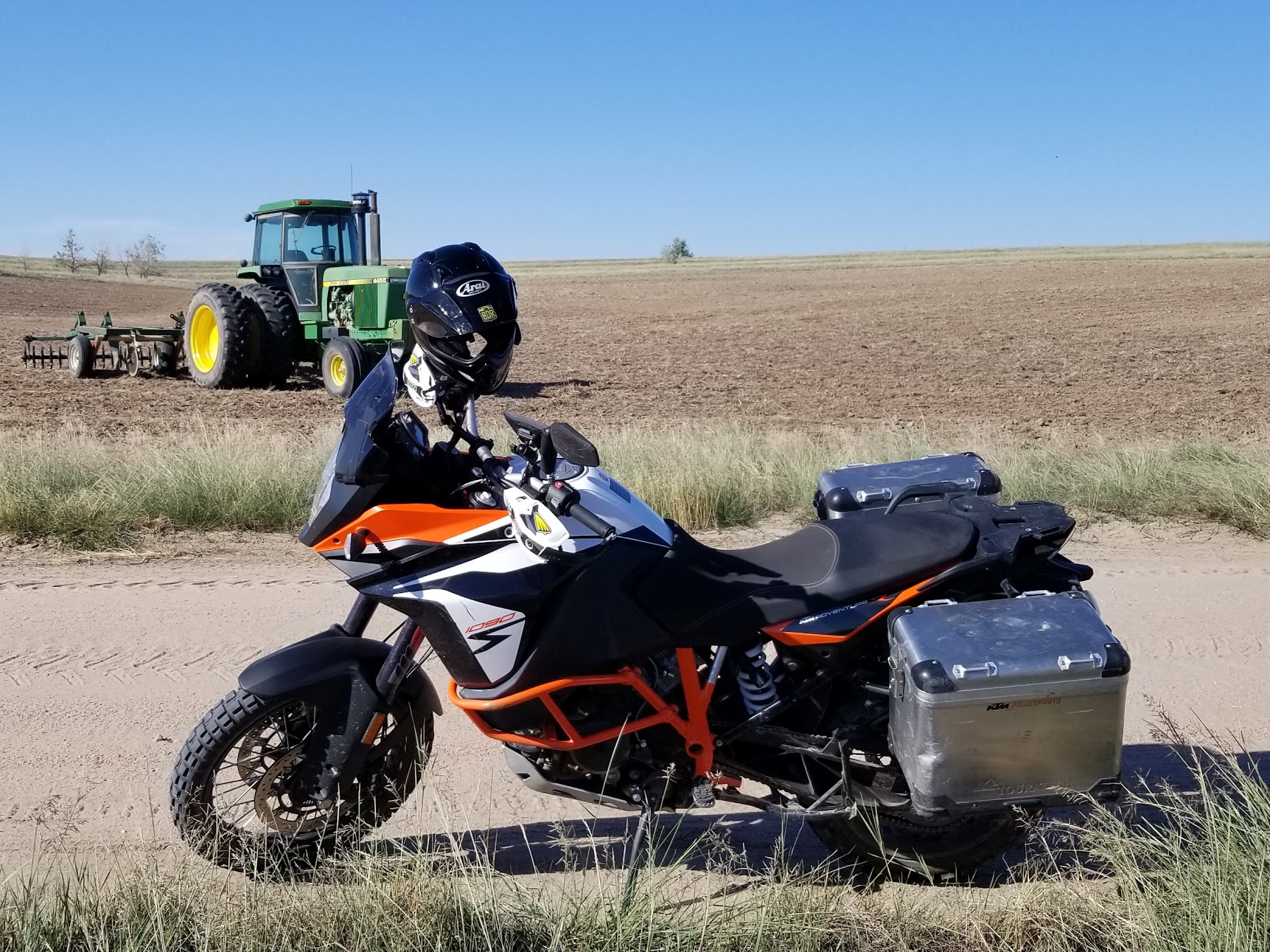
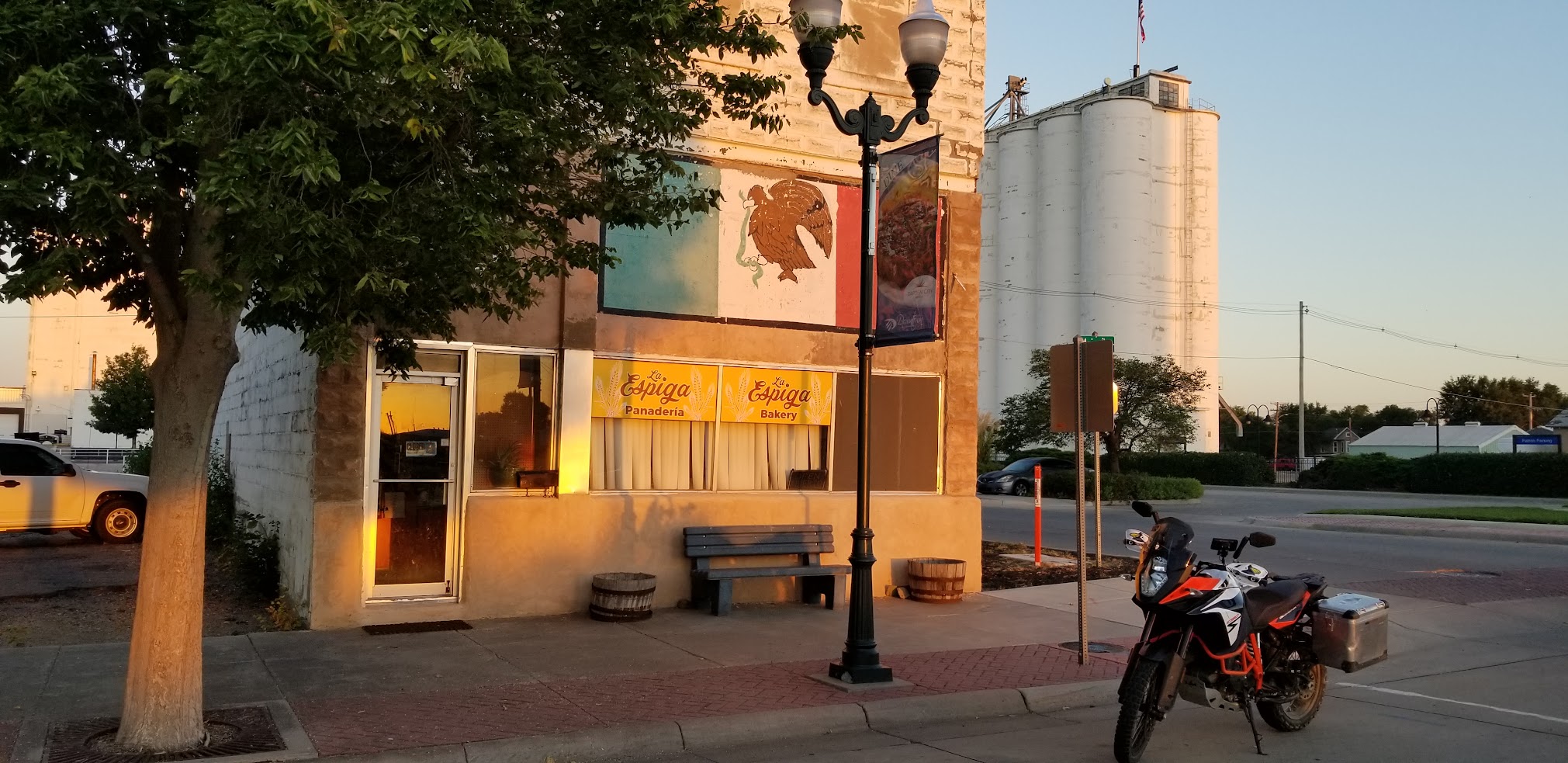
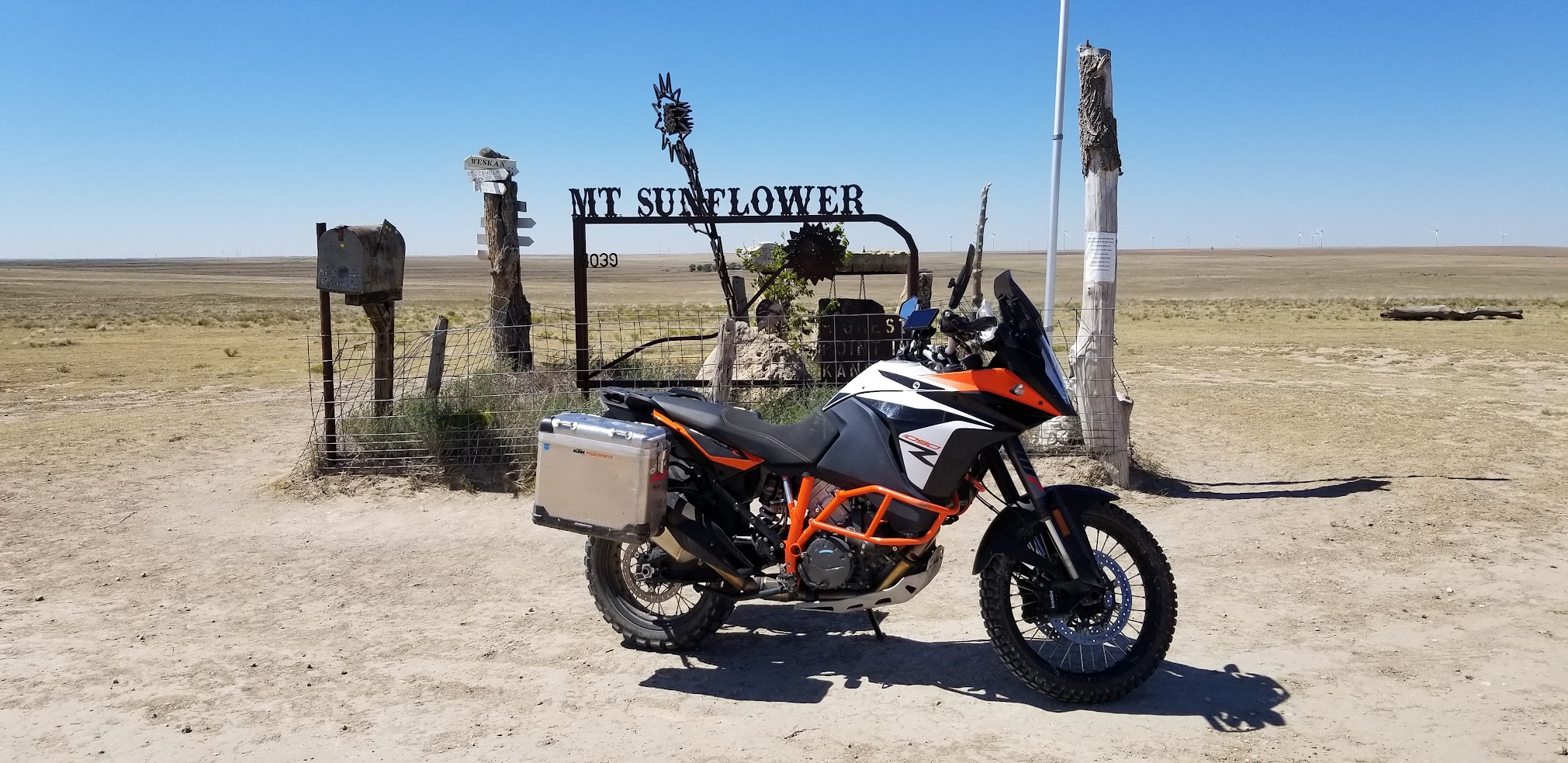
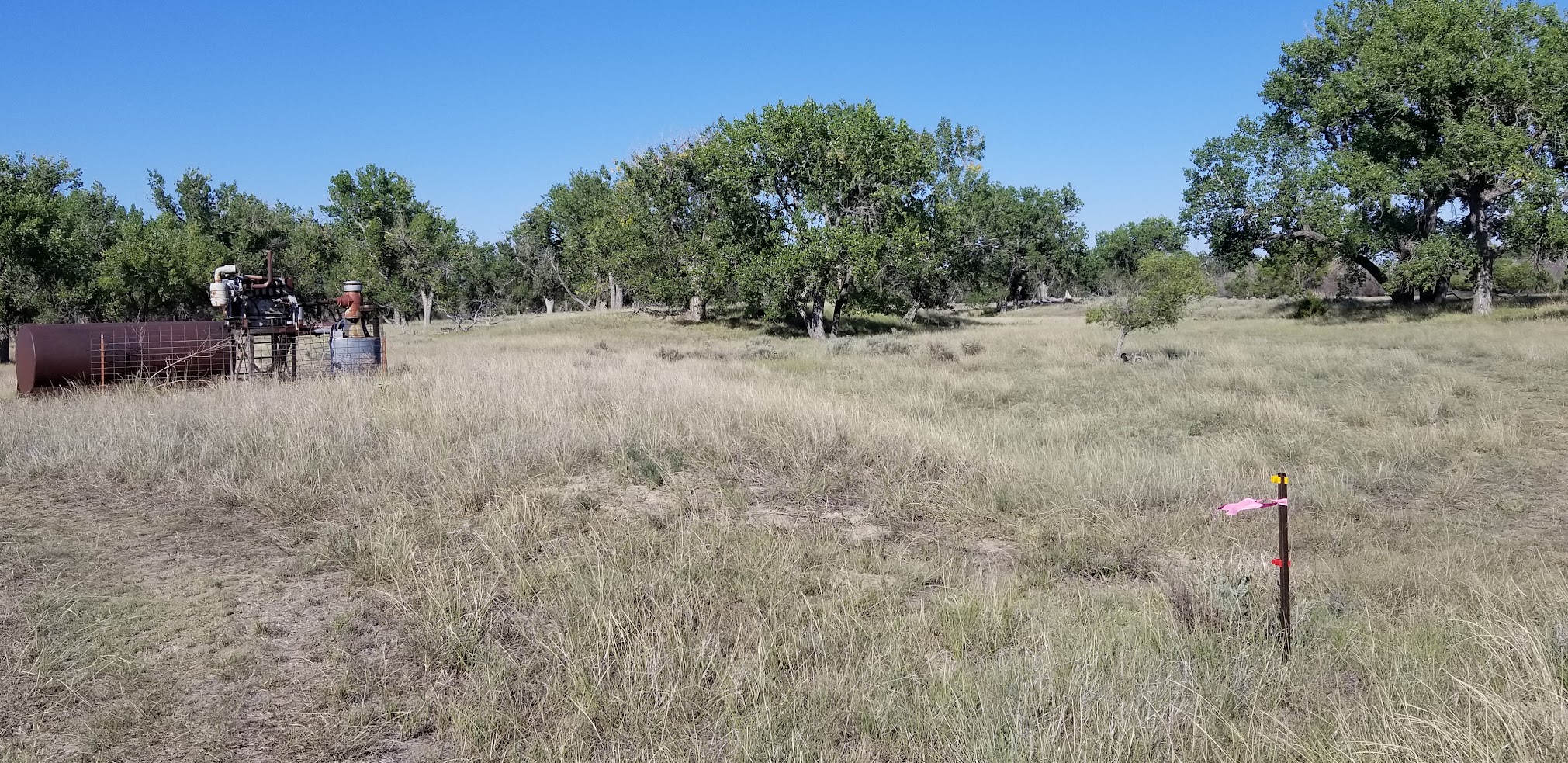
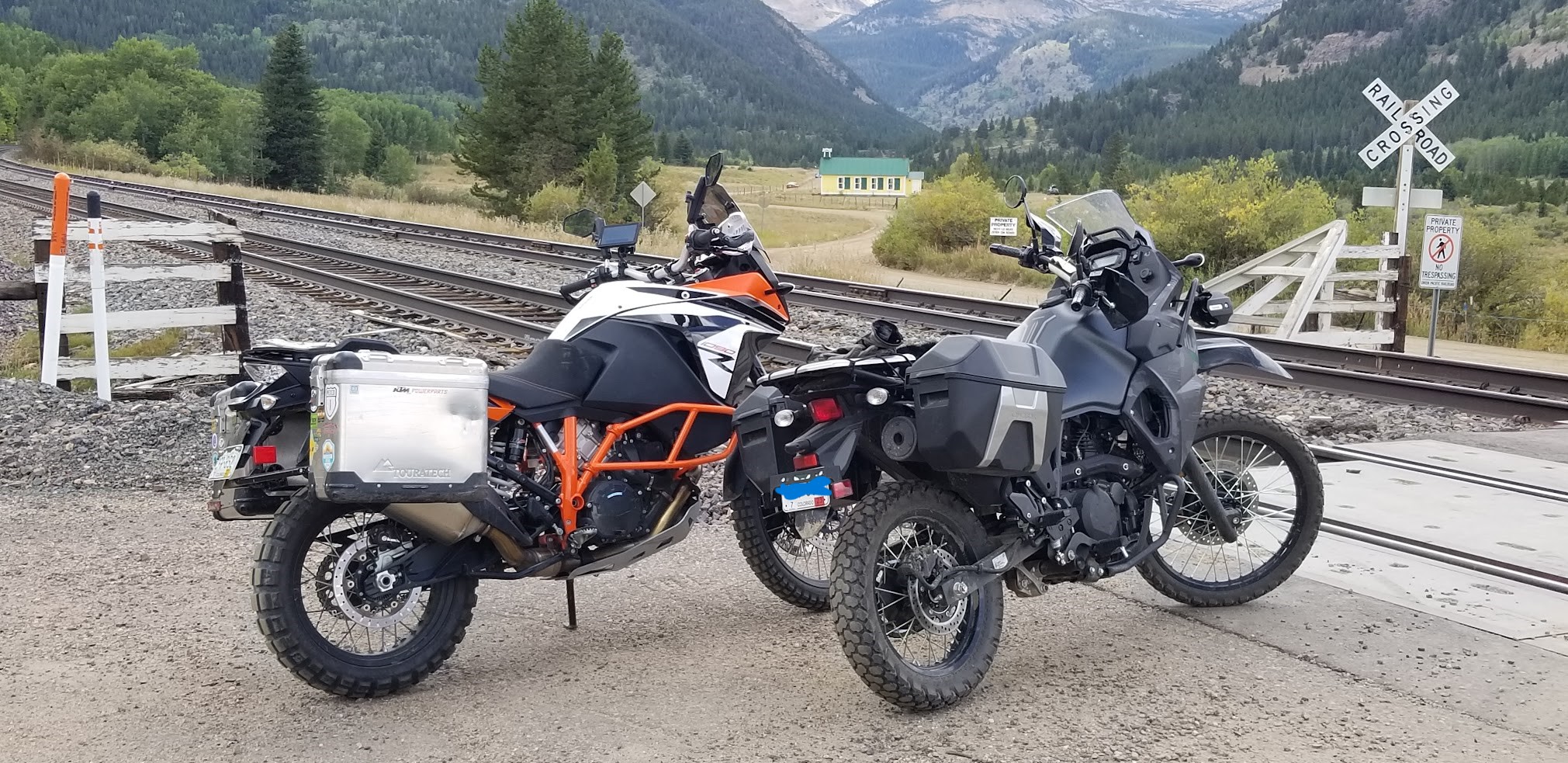
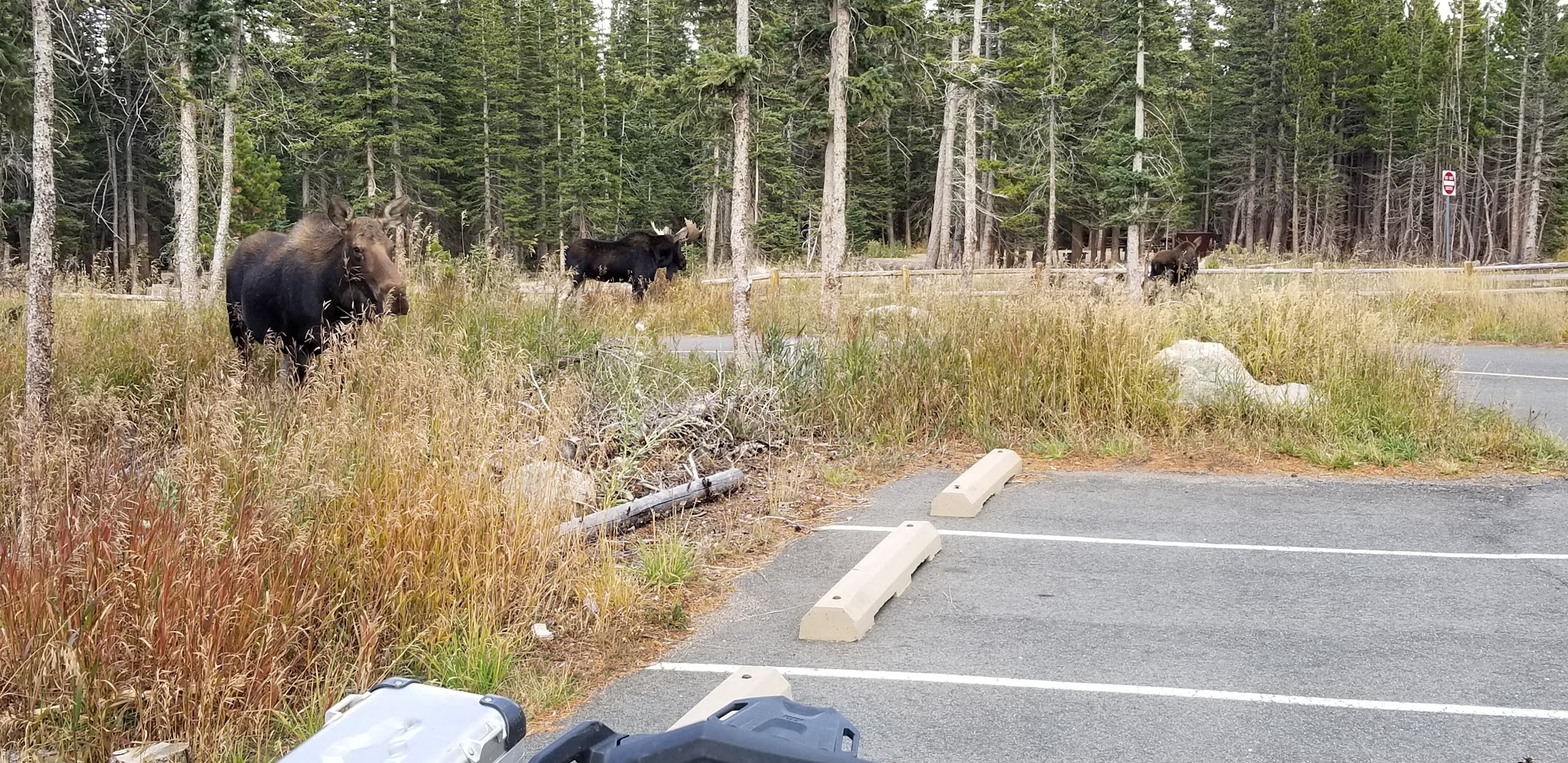
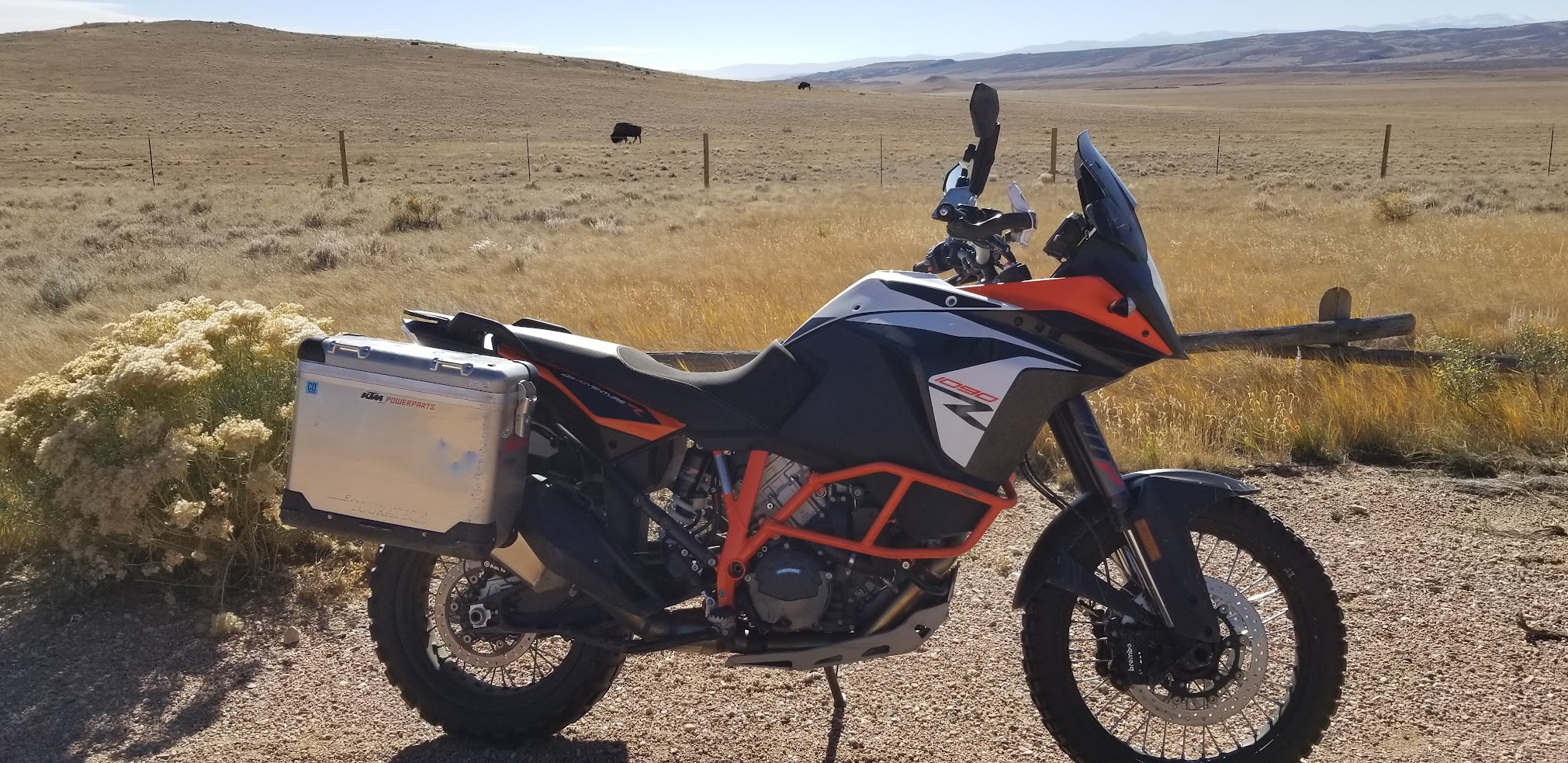
Training 2
The earliest my personal and farm schedule would allow me to take a more advanced training was in August of 2023. The course was here in CO, which had two benefits: a) reduced travel time to get there (given other scheduling pressures) and b) the majority of the participants would be local riders who might be future partners in adventure. I’d learned from my numerous mishaps (in Baja and elsewhere) that it is better and safer to ride with others, especially when one is pushing oneself into terrain with new levels of challenge. The pastures of some ranch land near Buckeye, CO provided the setting. I felt prepared to tackle the level 2 course, again going with Dusty’s great crew at West 38 Moto.
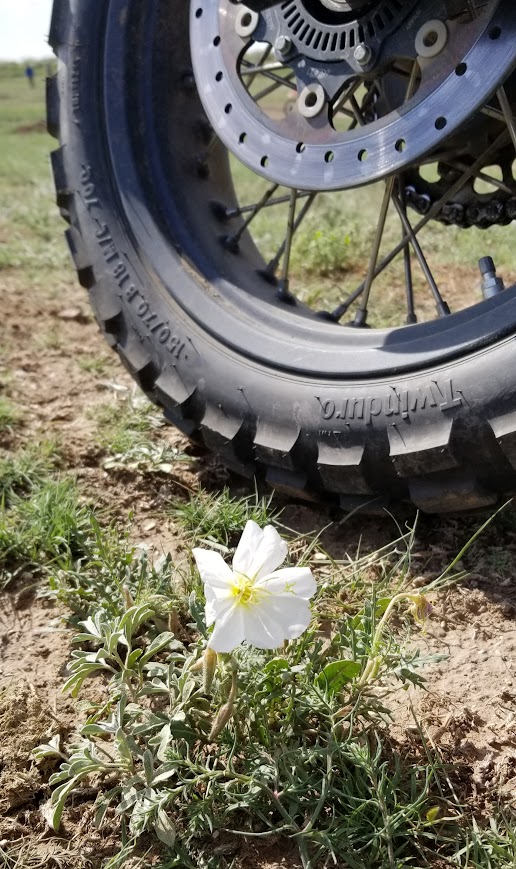
Level 2 is mostly a refinement of level 1 maneuvers, some at slower speeds, some at faster, but all with greater precision, tighter turns, and on steeper or rougher or looser surfaces. I performed well enough throughout both days that I felt fairly confident on the intermediate trail level trail ride that followed.
We level 2 riders rolled out knowing that one part of the route would be more intense than the others: it was steep, long enough that you couldn’t see the top from the bottom, marked not with ruts but with craters alternating from one side of the road to the other, not unlike an ice cube tray with alternating filled and empty cups on the diagonal from like to like. This year, the craters had been worsened by traffic through the very wet spring and early summer. (Happily, those rains had broken eastern Colorado’s drought! And they had brought out tremendous wildflower blooms, which is perhaps why this particular road bears the name Old Flowers Road). Loose gravel and rock would affect traction, and bigger embedded rocks would want to kick the front wheel to one side or the other. There was a considerable drop-off on the right side of the road, and an embankment on the left. Best to fall into the bank, of course, if one needed to and had a choice in the matter (ha!).
Dusty and the coaches let us know what to expect in our pre-ride talks. We discussed whether to ride this section up the slope (harder to keep momentum) or down (easier to keep and curb momentum). We five riders (Tom, Erica, Kat, Steve, and I) figured that we’d tackle it uphill as the truer test of our abilities. Plus, we had each other’s support and the help of the coaches (John and Dave), if we needed extra muscle or encouragement.
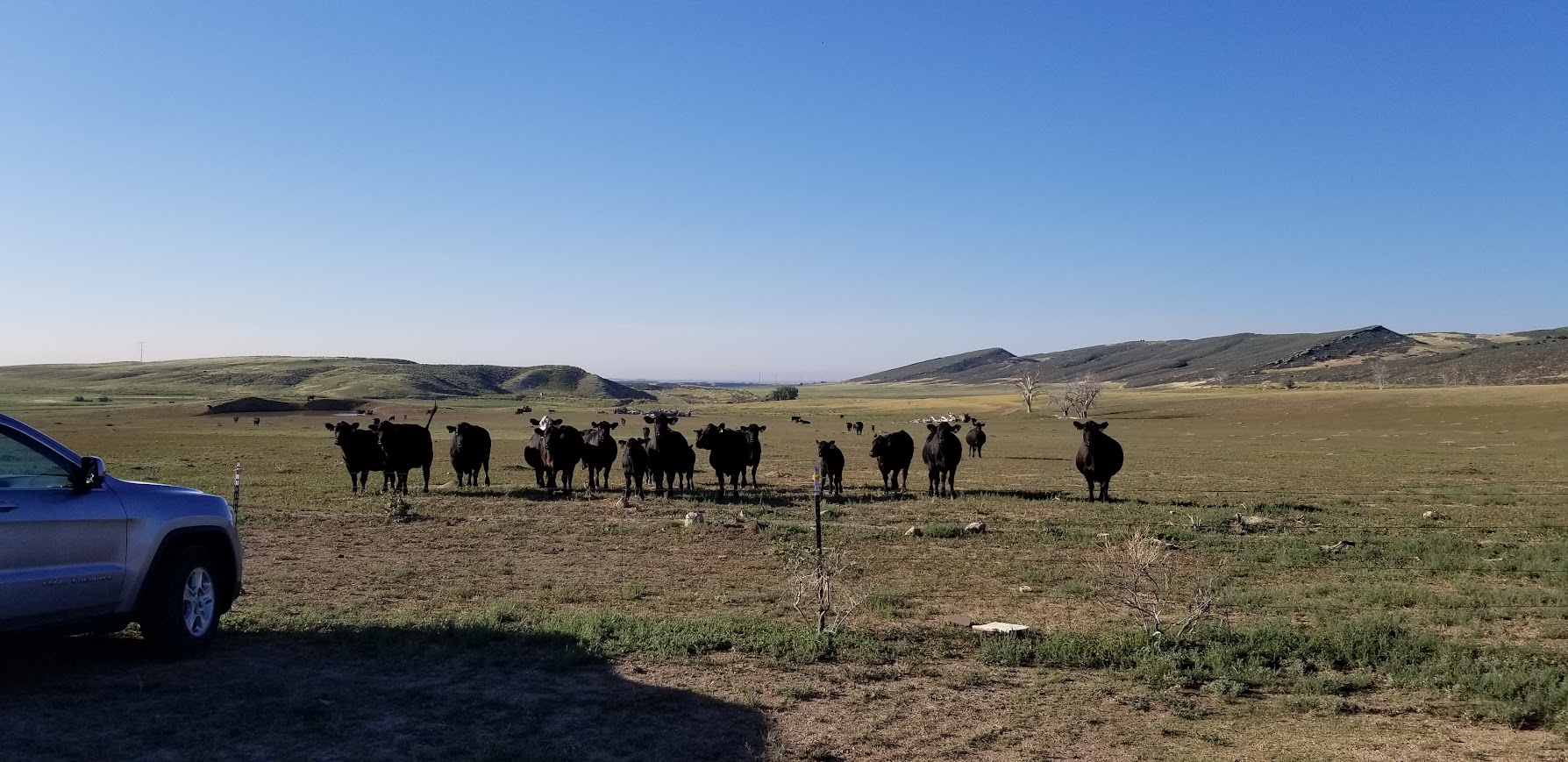
We had a darned good time. On the way to the steep bit, we found a muddy patch, and three of us managed to go down in it. And to get back up. We rode on, finding ourselves equal to the varied conditions we met. Around noon, we made it to the steep section. The lead riders made it up easily. At an earlier trail stop, Kat indicated that she wanted the last spot before Dave, so I had moved up in front of her and took on the steep section. I did not carry sufficient momentum, and so had to lean into (fall toward) the embankment. No harm done. I was able to right Mongo and restart for a bit before my indecision about my line (the course I’d follow around the deeper part of a crater) and my inadequate momentum led to a proper fall. After my first stop, Kat was already on her way up. Abit after my second fall, she crested the rise below me. Mongo and I were far enough to one side of the road for her to keep going safely past, but the conditions and the added obstacle perhaps gave Kat some indecision, which was all that was needed to tip her bike, too.
We were both unhurt, able to nervously laugh it off, and take each other’s photos as John documented the scene from above.
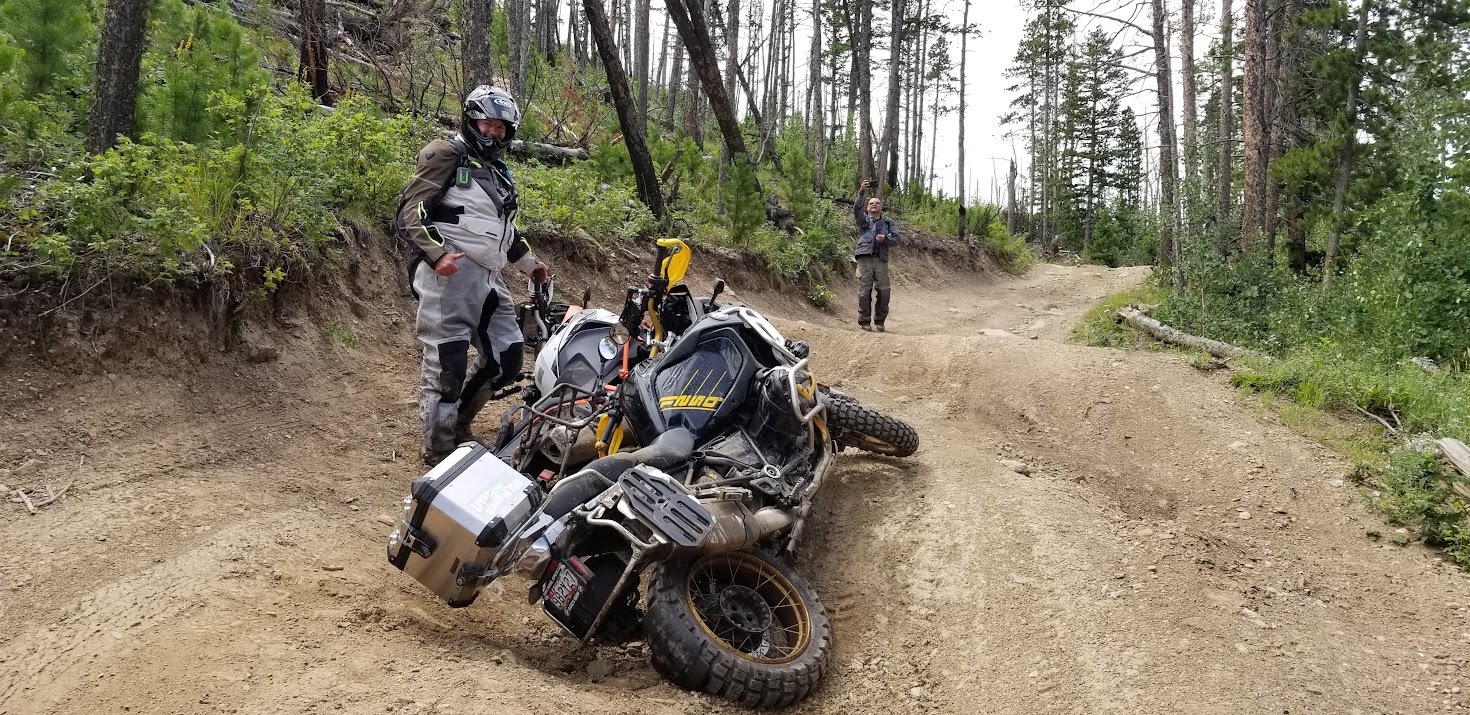
We had a fine ride the rest of the route, then got back to camp and parted ways. Before doing so, some of us exchanged numbers and were aiming to build a local riding group as a way to maintain the ‘momentum’ of our training so that our skills did not backslide, to enjoy each other’s fellowship and wealth of varying experiences as riders and in life. Since doing so, I’ve managed four outings with significant amounts of riding off pavement:
- Tom and I did a late-morning ride op through Gold Hill and along the road locally known as the Switzerland Trail. No crashes/falls! Also, no photos!
- Vince, Jeroen, and I spent about a fine day together going up Flagstaff Mountain, along Gross Resevoir Road, then up Coal Creek Canyon to Rollinsville. From there we enjoyed Tolland Road and did the full eastern length of Rollins Pass Road (which is now closed to vehicular traffic about 1000 ft. from the pass proper). One crash, but the rider was unharmed and the BMW had only cosmetic damage. Photos in the gallery below.
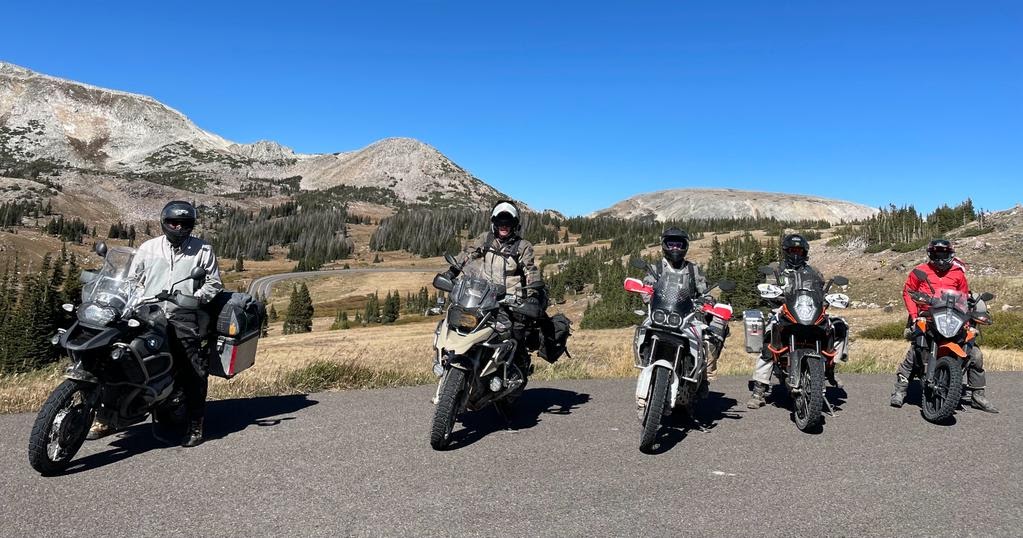
- Six of us did an overnight camping trip up into Wyoming and along a section of the WY Backcountry Discovery Route , ending in the Medicine Bow National Forest before returning to CO on pavement. I found the one deep rut on it, and yes, I went down, but without injury to me or Mongo. We had some fun water hazards, too, although one poor rider hit a submerged rock that tipped him into the icy water on a day when they high was around 60 degrees (F). There were a few other tips and spills, but there were plenty of hands to help raise the bikes, and we all got back safely. Photos below.
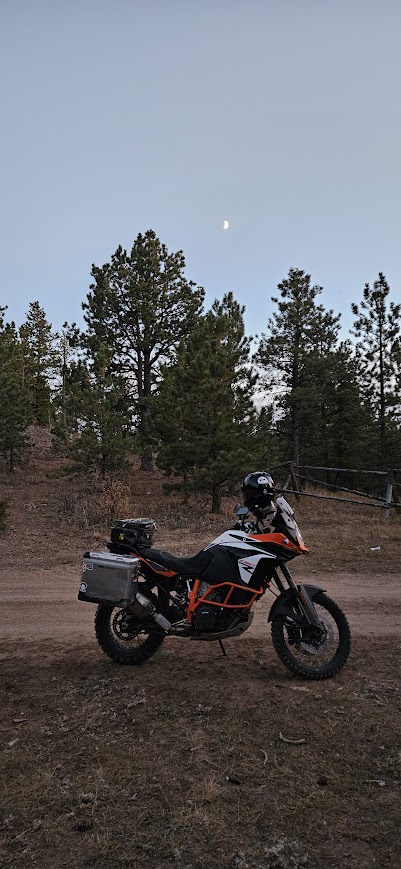
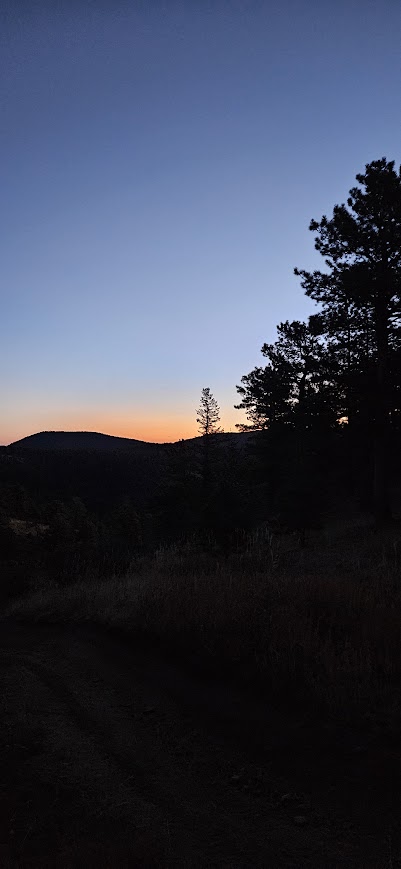
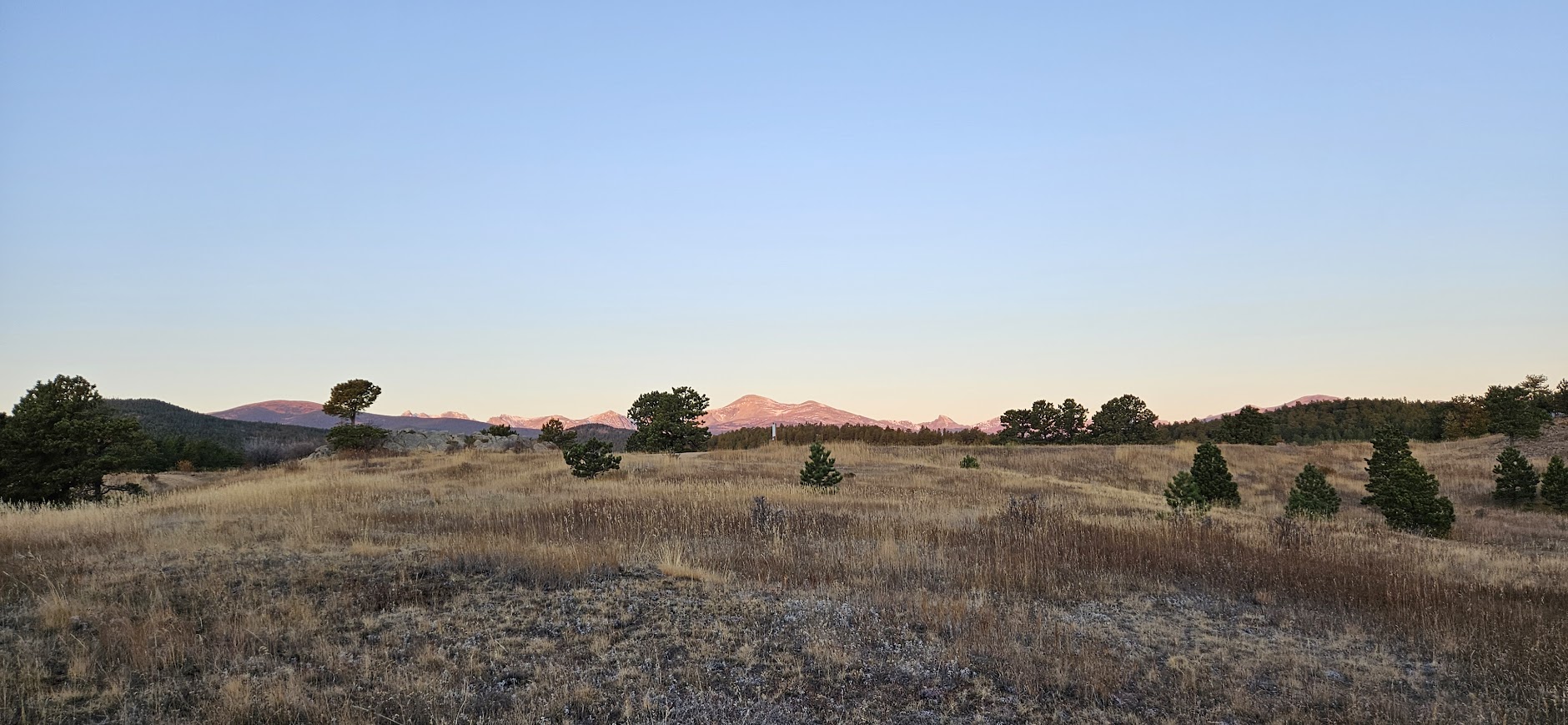
- Jeroen and I did an overnight camping trip at Gold Lake (near the top of Left Hand Canyon). Unfortunately, by bike developed a fluid leak and I had to withdraw from the next day’s planned ride, but by all reports, Jeroen, Vince, and Gordon made the best of their riding. Photos below.
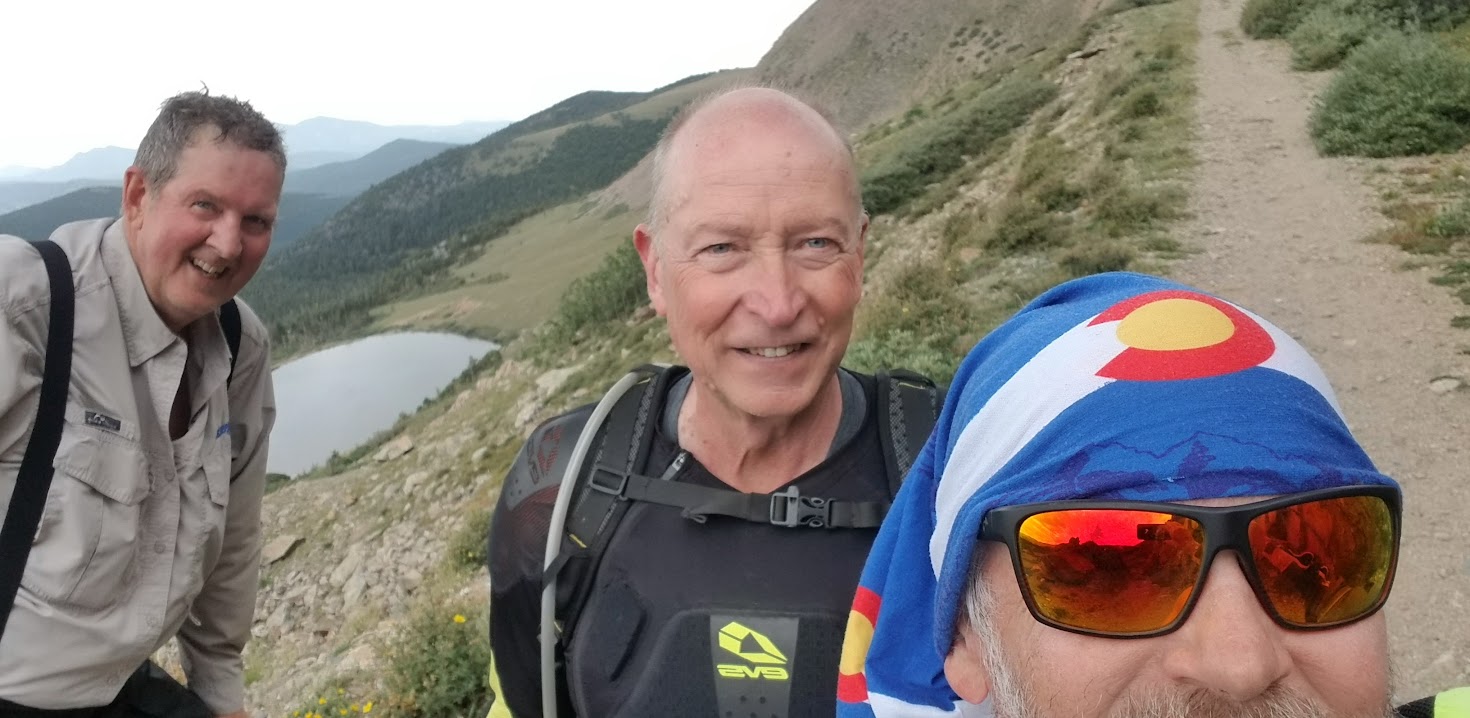
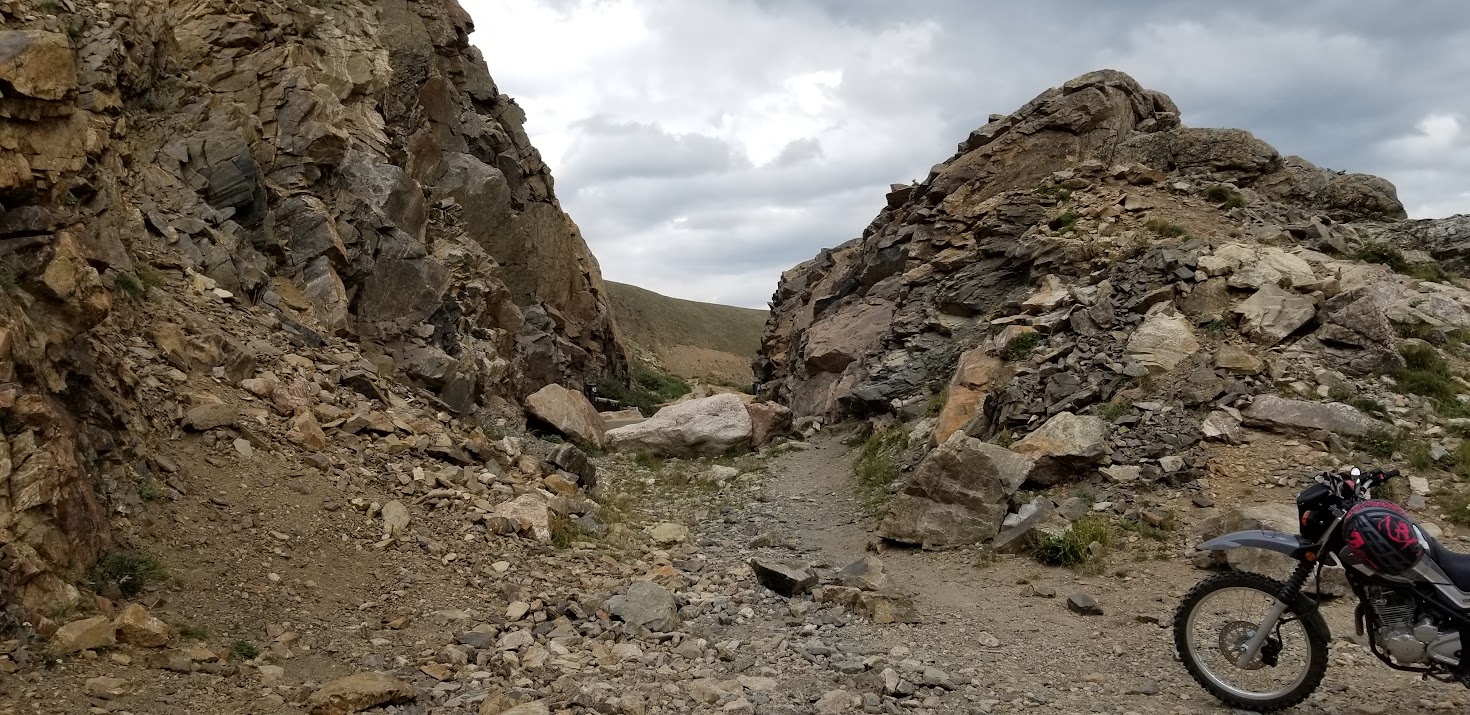
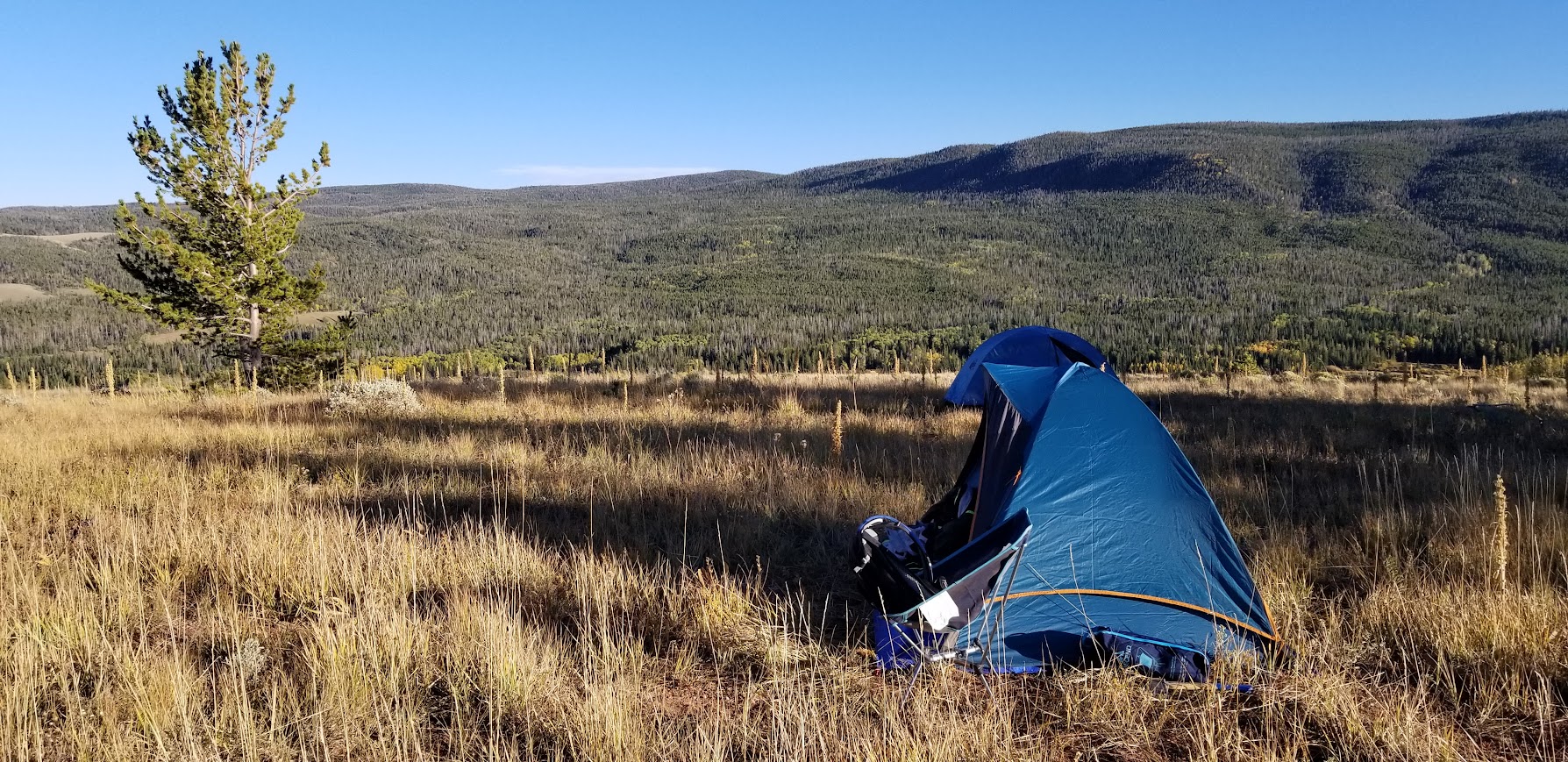
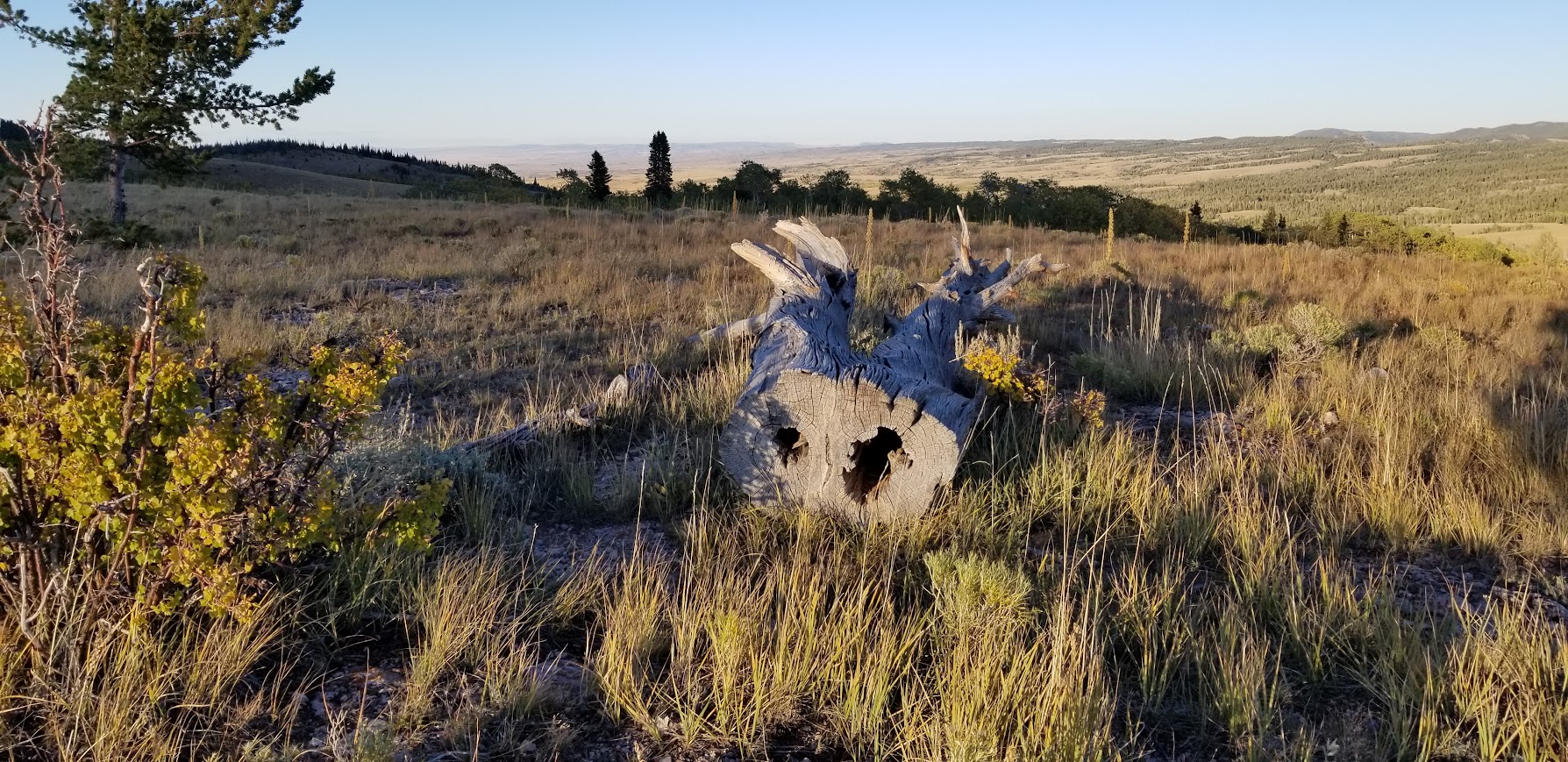
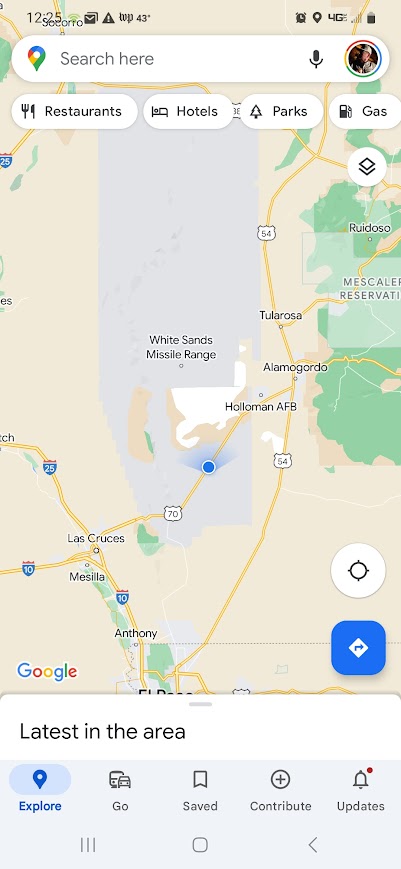
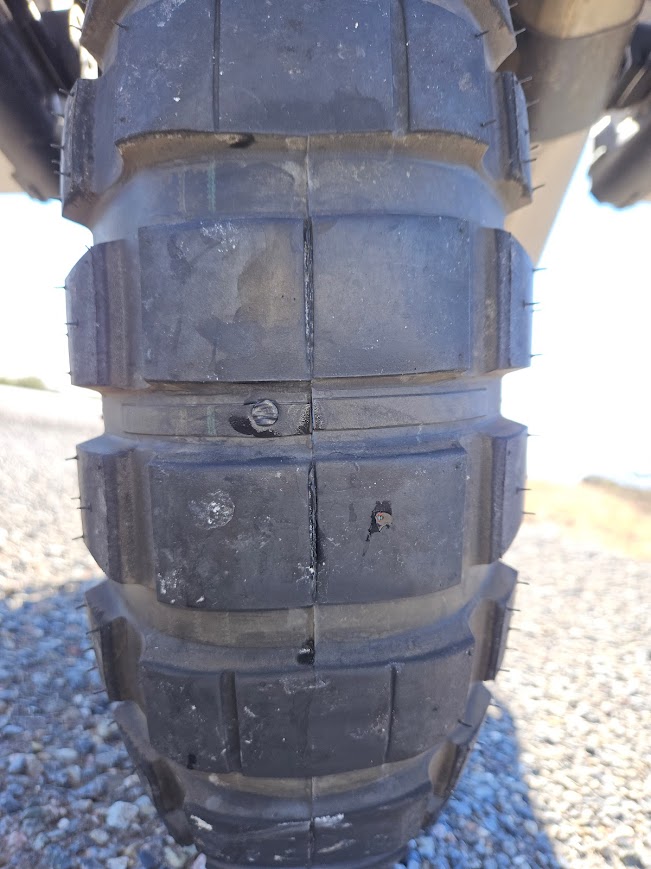
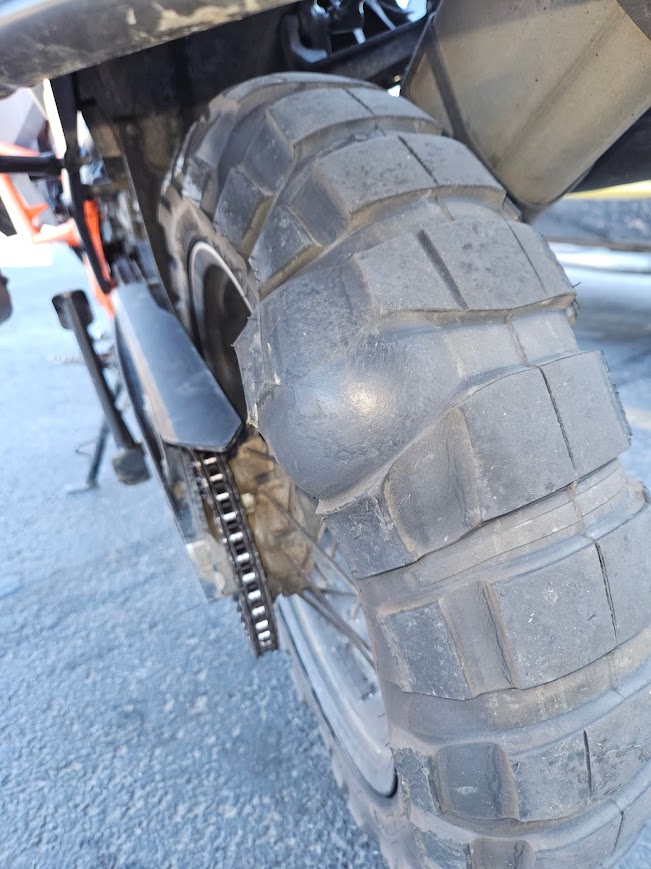
I also did some solo riding once the fluid leak was repaired. Mongo and I returned to Kansas for fall harvest and for a workshop at K-State, then zipped through parts of Oklahoma, Texas, and into New Mexico. There a failed rear tire deflated my plans to ride on to visit family in California. It seems that I had picked up a puncture leaving White Sands National Park. I noticed it and was able to plug and reinflate the tire, but the short time I had ridden on the it with low pressure weakened the sidewall to the point. By the time I reached Las Cruces, a bulge had grown to the point that it was no longer safe to ride. And by the time I located a replacement and had it mounted, I’d lost three days. With remaining travel time and preparations to make at home for the upcoming Thanksgiving holiday, I could at best spend two full days in San Diego Gah! I aborted the rest of the trip (bitterly regretting my bad luck and the fact that I’d disappointed my family) and headed back to Colorado.
On the bright side, I guess that means that I will have new opportunities for adventure when I finally make my visit to San Diego in 2024. I bet that I find some more ruts, but this time I’ll manage to keep Mongo and me rolling on through and out from them.
This is my final post of reminiscences on past adventures. Coming in 2024 I will be writing weekly brief posts about my work and learning process in agriculture. And maybe about adventures that haven’t happened yet. If you’d like to keep up with me, please subscribe to my blog. You’ll get a single email each week announcing a new post.
 The PHurrowed Brow
One response to “Ruts”
That’s a lot of adventuring!
LikeLike