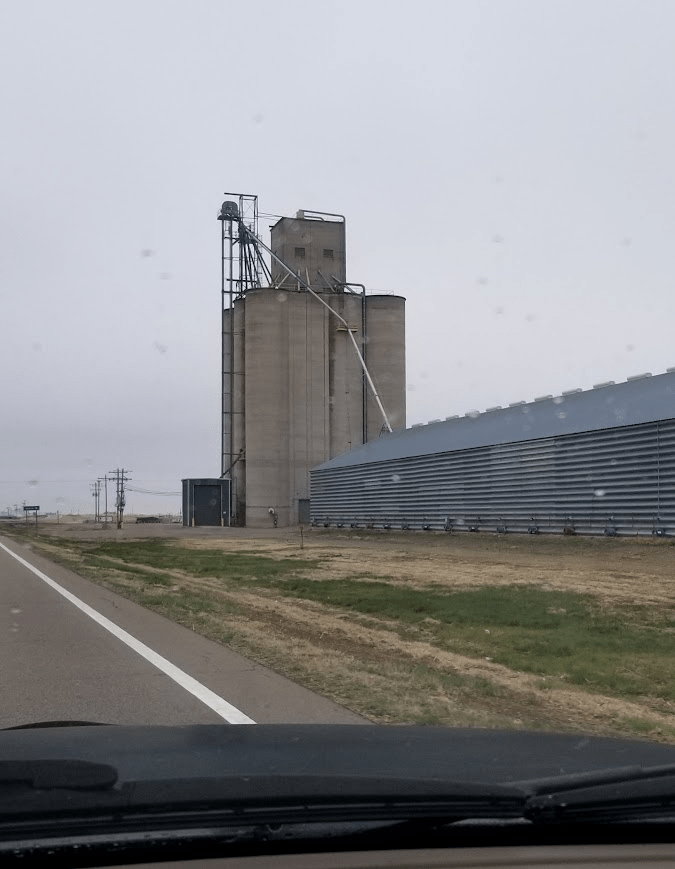
My work in managing farmland is a by-product of my marriage. My wife and her siblings make up Generation n of a family that arrived in south-central Kansas in late fall, 1872. You can do the math to see that this is just over one hundred fifty years ago. Genn+1 of the family, represented by our daughter and son, are not yet involved in the farm, but we certainly aim to give them opportunity to learn, run, and diversify it according to their own interests.
Generation One on the farm was a widow in her forties. Indeed, she is the dynamic force who built the farm! She had been head-of-household for some six years before she and her nine surviving children sold the family’s interests in Indiana and migrated to Kansas. (Yes, to justify the title of this post, she did indeed Haul in the Family).
The attraction was “free land.” (Just so that you know your author, I am often beguiled by so-called BOGO and other ‘free’ offers. Coupons are some of my best friends.) In this case, “free land” was land appropriated from Indigenous peoples, land appropriated by the government(s) of the United States and its territories and made available to immigrant and ‘native-born’ Americans under the Homestead Act. which had been signed by Abraham Lincoln in 1862. Here’s another view of the Act which provides a full transcript and further context, hosted by the National Archives.
Gen One and five members of Gen Two settled on six pieces of ground in order to establish claims under the Act. They built homes and farms, living on the land and working it to produce a livelihood and crops for the requisite five continuous years. How they did so is beyond me, as I write this from a very comfortable, modern, and warm house in Wichita when the temperature outside is a mere 7 degrees (F). I suppose that we all have reserves of fortitude that we can tap when we need it. Gens One and Two certainly needed fortitude and good fortune to succeed and prosper as they did. The Homestead Certificate which gave Gen One title to her quarter of land was issued in 1878 and bears the signature of Rutherford B. Hayes. (Phun phact: The Presidential election of 1876 was closely contested and the results hotly disputed!)
I squandered many opportunities to learn from the members of Genn-1. My mother-in-law and father-in-law shared bits of what had been passed down to them from prior generations and what they had experienced in growing up on and (later) managing the farm. But I failed to ask as many questions as now float to the top of mind. In their generation and in those before, there were great fractures in the family, and an abundance of familial devotion as well. From the stories that I have heard, I’ve extracted the important general principal that the farm should never be better known to judges, lawyers, and bankers than it is to members of the family. A close second to that in importance is the tenet that no one succeeds in farming alone. At least not in the long term, a term which spans one’s lifetime and that of one’s progeny.
In truth, no family succeeds in farming without other families. No matter where we get our fantasies in the key of A (A for-agriculture: Field of Dreams? Children of the Corn? the Duttons and their Product-Placement Ranch), we’re missing the truth of it. It has been multiple generations since the members of my family-by-marriage lived or died with their hands on the plow, thresher, or the elevator. Through periods of growth and periods of loss, my family-by-marriage has fostered and been fostered by the families of our business partners. In our case, the most important business partnersare the leaseholding farmers. Those families will feature in my next post, after which I’ll try to give y’all a sense of the areas (acres, quarters, sections) and volumes (bushels and the like) that define the farm and the farm’s agricultural products. (Yes, math ruins just about everything, if you let it.)
If you’d like to keep up with my writings about agriculture, please subscribe to my blog using the field below. You’ll get a single email announcing a new post each week.
Additionally, please use the Leave a Reply area further below to pose any questions you might have about what you’ve read or are curious to know.
I will certainly respond and possibly give an extended answer in a future post.
 The PHurrowed Brow