The twelve or so hours between parting with my son and and beginning the drive to Lafayette contained more difficulty than I would like. Even now, when judged through my own eyes, those hours belie much of how I like to present myself, including how I’ve done so in this narrative and reflection. After the short trip from my son’s apartment to my hotel, I chose to linger in the hotel parking lot. I wanted to take in the colors that sunset and twilight brought to the sky, to enjoy the cool air, to be alone with my thoughts in the open.
This segment is the sixth in a series featuring mountains both real and figurative,
climbs that are successful and not, and water that is varyingly life-giving, dirty, and toxic.
The series narrates experiences of me and of those around me in June and July of 2023.
This account features disturbing content: suicide, addiction, and reports of racial violence, rape, and intrafamilial sexual abuse. The narrative reflects my experiences and what was reported to me. I have no certainty that the reports made to me were true,
but I had to consider them to be possibly true at the time that I heard them.
Please do not read further if these matters jeopardize your wellbeing.
If you are in a low spot of such a kind, please reach out.
Reach out to me, to anyone you trust, or to the 988 help line.
Toxic water
As I enjoyed that quiet, I noticed that two other fellows were out. One of them approached me to chat. I learned that he was coming off 13 solo days hiking the Colorado Trail. Fellow #1 had completed the trail twice in past years, but that day felt that he had reached a stopping point for his present attempt. His thoughts and feelings were taking him back to Michigan to accomplish some unspecified things at home. As he finished his post-hike beer and a cigarette, we talked a bit about his experiences on the trail and his background and, when asked, I shared a little bit about why was in the high country, including my concern for my son after his co-worker’s suicide. All was amiable enough, and I wished him safe travels as he discussed his plans to catch the bus to Denver early in the morning, then catch the train to the airport and fly home. It would be a long day for him, but at least the pick-up point for the bus is just outside the hotel in which we were staying.
As this first fellow departed and darkness settled in, I thought it would be a good idea to head in, reorganize and pack up most of my items and grab a shower before sleep and the morrow’s drive. As I turned towards the nearst door of the hotel, Fellow #2 approached me and asked to talk. His difficult story occupies the rest of this piece, and the designation Fellow #2 seems an inadequately distancing label for him. In our conversation we exchanged names. His name is evocative of the Colorado’s high country, but wish to honor his privacy by referring to him with the pseudonym Hillman. For simplicity’s sake, I go by my childhood nickname Pete in my hiking, motorcycle, and gym circles. That’s the name I offered to Hillman as we conversed.
Hillman’s unsteady approach and slurred speech made it clear that he was intoxicated. In short order he relayed that he’d heard me speaking with Fellow #1, he was in trouble, and he felt that he could turn to me for help. I soon also learned that Hillman had just been fired from his job with a drilling company and that he was there to catch the bus to Denver and on to Colorado Springs where his truck was stored with a buddy. There was real despair in his words.
Hillman also voiced that he needed help, did not know want to do, and was close to ending his life. To prevent that from happening, I stayed with him and listened and questioned, hearing of a youth on the eastern plains of Colorado that would strip optimism from just about anyone. What he reported, I advise again, is horrific, and you may wish not to read further.
Before the age of ten Hillman had been forced by his parents to watch a racially targeted, KKK-like killing of a man; around the same time he was forced by an older sister to perform sexual acts on her; at 13 he was raped by a man who had also led him into crack cocaine use; finally, in his mid-twenties, Hillman had tried unsuccessfully to use CPR to revive his two-year old nephew who had collapsed at a family gathering. Ever after, this failure to revive the child had haunted him even though an underlying untreatable medical condition had killed the boy. Thereafter, he had married in South Carolina and had a daughter. But in his absence from the family for work as a driller in Colorado, his wife had taken lovers. Hillman’s divorce settlement (along with the need to earn money at a profession that, he said, has few opportunities in the south) left him little hope of having joint or full custody of his daughter who was, at that point, his only reason for living. He also said that he had spent $40,000 in rehab after a prior span of deep addiction, and was in contact with the rehab provider, but now had no money or insurance to pay for another stay.
In the hours of listening to Hillman, I suspended disbelief, for there was no doubt that his crisis was true and life-threatening. His tears were real. I didn’t have a plan, but I guess I hoped that the time talking with me would help him shed both some of his darker feelings or impulses and to shed some of the alcohol from his system. At a couple points, I had supported him back to his room where I saw evidence of what he was experiencing.
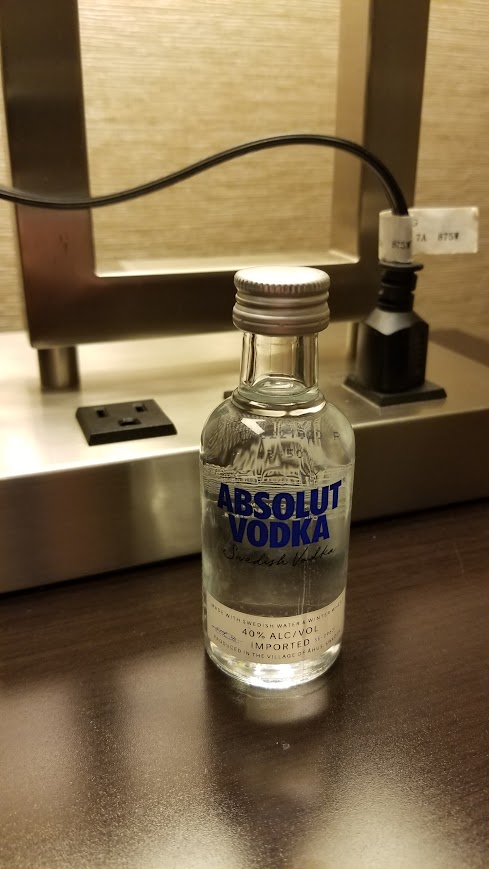
The first time, we both had needed the toilet, so I got him to his. Before he did what he needed to, he showed me his stash of booze, a fifth of Svedka and two 50 ml shooter bottles of Absolut. As I tried to persuade him to let me hold the bottles for him, he mixed some of the Svedka into a cup with Coke and drank it down. At least I succeeded in getting him to give me the bottles, telling him I would keep them in the bed of my pick-up where we would resume our conversation. Before leaving his room to take care of my needs, I also saw his hard hat from work, a big duffel and backpack, as well as signs that he had already been stone drunk for some time: a pair of jeans, underwear still half in them, were lying shed on the floor, with a smear of feces from them onto the floor itself. I did not see a weapon in his room, but had to assume that he had one. I left Hillman briefly, promising to return, then quickly handled my own needs in my room before taking him (with his bottles) back outside.
When we resumed talking in the parking lot, I put the bottles in the part of the truck bed where shadows seemed most likely to keep them out of sight, and I resumed trying to help him by talking. I didn’t try to challenge what he told me about his past, but asked more questions, again aiming to draw out his story and time so that his intoxication would diminish. And I spoke sympathetically where I could, whether drawing from my own loss by suicide, or in speaking of love for one’s children. At the points where he spoke again of despair and self-harm, I did my best to recommend Alcoholics Anonymous, or at least intervention by his rehab provider, focusing him on getting through the night, onto the bus, and back to his truck. And I tried to distract him from the bottles that would keep him from these small next steps. I asked him to show me photos of his daughter, which he did, and while our phones were out I got his phone number and texted him so that he had mine. At about 11:30 I thought he might be able to make it through the night, but he broke down again when I was preparing to leave his room for mine, and we returned outside to talk some more.
My efforts at distraction ended in vain. Near 1 a.m. I knew and felt that I needed some rest before the next day’s drive. I told Hillman so, and promised that I would set my alarm and come make sure that he was up and ready for the bus. And I pointed out that he had my phone number and could call if he needed to. But before we left my pick-up, he moved around to the shadowed part of its bed and grabbed the bottles. Again I supported him as we climbed the stairs to the second floor. When I got Hillman to his room, I tried again to get him to part with the booze. I even slowly picked up the three bottles. He grimaced as I did so, then unsteadily took them all back. I kept trying verbally. I guess he thought that I wanted to drink them. Or he wanted to. Or they represented the idea of an escape from troubles, an idea he couldn’t release. He kept the fifth (now one-third full) and one of the shooter bottles, but decided to give me the other one. When I could not change his mind, I encouraged him to plug in his phone and get some rest, promising that I’d set my alarm for 5 a.m. and make sure that he was up and ready for the bus.
I returned to my room, set the alarm as promised, and fell anxiously asleep.
If you enjoy what you’ve read, please post a comment. Likewise do so if you were troubled by it. Or use the contact button to send me a private message. And to have you subscribe to The PHurrowed Brow using the link below, well, I should like it of all things!
 The PHurrowed Brow
5 responses to “WATER, MOUNTAINS, CLIMBS: VI”
If every word of Hillman’s history is true, that is one kind of tragedy. If every word is a fabrication, that is another. Either way, he deserves compassion and you gave him that, sacrificing sleep and rest to sit with him in his agitation. You embodied Terence’s observation that because “Homo sum, humani nihil a me alienum puto” (“I am human; I think nothing human is alien to me”). It is easy to see the connections between ourselves and people we like, but too many of us have unlearned the instinct to reach out to people who seem alien, other, perhaps even, in some sense, disgusting (“a pair of jeans, underwear still half in them, were lying shed on the floor, with a smear of feces from them onto the floor itself”).
You mention that you “did not see a weapon in his room, but had to assume that he had one”; I am relieved you came away from the encounter unscathed. I wonder how you weighed the balance of your safety (in terms both of the danger that someone so inebriated and desperate who likely had a weapon posed and of the dangers inherent in driving down steep and winding roads with far too little sleep) and the needs of a fellow human being. I think you handled this extraordinarily well, considering the way Hillman approached you out of the blue when you were already tired and drained, but I wonder if you have had any hindsight epiphanies about other courses you might have taken. For instance, might calling the police or a hot-line while you were in the bathroom have been helpful to you and to Hillman? But perhaps these are topics you are already planning to address in tomorrow’s post.
I honour you for your empathy and care for another human creature in distress.
LikeLike
A beautifully tragic and raw glimpse into the harsh world that many have come from and/or struggle with. It makes me curious about what happened after this. Hopefully he is ok and finding a glimmer of light on his dark world. Thank you for being that glimmer, on that dark night. I’m sure Hillman appreciates you more than he might be capable of expressing
LikeLike
Thank you for your kind appraisal, Emily. I, too, hope that his world is becoming brighter!
LikeLike
Pierre – I’m not sure if I’d ever mentioned it to you, but I had parted ways with Mines to pursue a career in emergency medical services. I’ve been in the game going on three years now, and learned in that time how often a listening ear like yours can make a genuine difference in the lives of those who have been laid low by trauma, drug/alcohol use, and any of the other maladies of life. It’s wonderful that you took the time to care for this person.
I hope you’re well.
LikeLike
I appreciate your kind and experienced appraisal of my interactions with Hillman. I have followed (on fb) and admired your commitment to being a frontline resource for people in need. Knowing you, I am sure that your caring manner makes a tremendous difference for people in need.
LikeLike