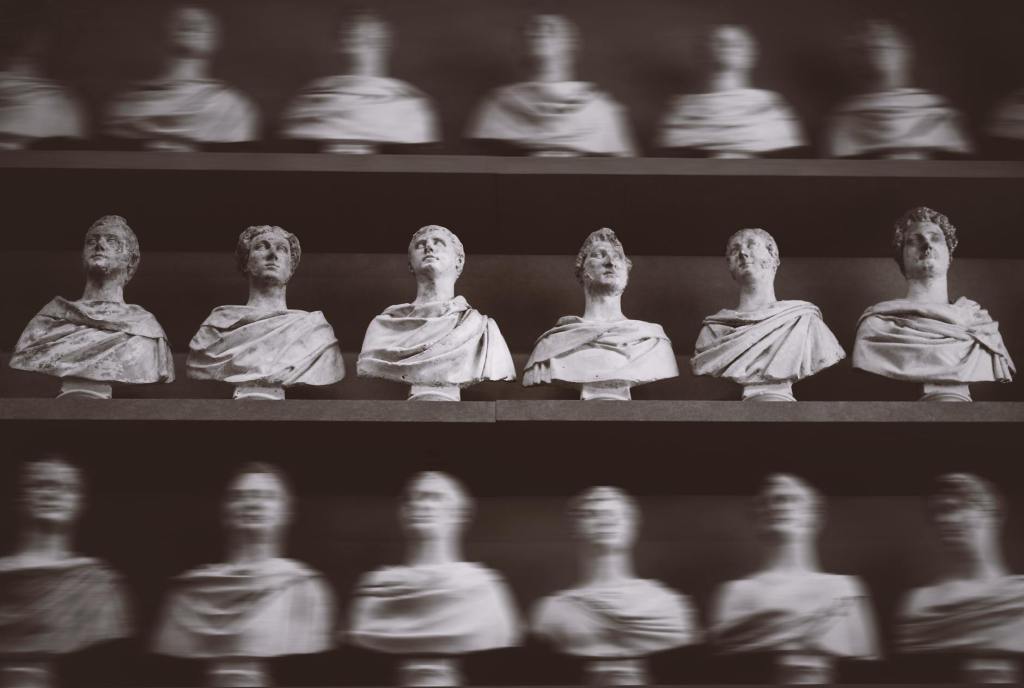
Students in AP Latin have a priceless opportunity to peer into the mind of one of the most memorable men of human history when they read Julius Caesar’s de Bello Gallico. As both the author and the frequent subject of this account of the Roman conquest of Gaul, Caesar gives today’s Latin students a bird’s-eye view of the military and personal challenges of this world-changing conquest. They already know that without the victories of the years 58-50 B.C, Roman culture would not have been embedded in northwestern Europe nor (eventually) Britain, and that Caesar would have lacked the political capital and financial wherewithal to launch his takeover of Rome’s government as dictator. Reading the Latin of Caesar’s account of the Gallic campaign, however, allows students to move beyond historical platitudes to scrutinize how he accomplished what he did.
Students swiftly learn of Caesar’s bravery, his physical fortitude, his decisiveness, and above all his skills as a leader. They study Caesar himself as he engages with allies, enemies, and his own troops, and copes with misfortunes that meddle with well-conceived plans. Over the arc of the eight years of his campaign, Caesar moved from direct command of a single legion (approximately 5,000 men) to overseeing a force of ten legions and their auxiliary forces. Why does this matter? Simply put, Caesar could have accomplished little of what he did without carefully cultivating the leadership capacities of his subordinates. Large sections of Caesar’s narrative focus on how those subordinates (ranging from legates who commanded individual legions to centurions who commanded just 80) over time and in response to Caesar’s direct and indirect influence adopted the habits and mindset of their leader to great effect. At numerous points, men choose to emulate Caesar, and their acts of emulation at critical junctures turn looming defeats into eventual victories.
There is one striking disaster among the victories. In the winter of 54 B.C. Caesar needed to disperse his legions in winter quarters among increasingly rebellious tribes. One camp was manned by one and a half legions, and had two legates commanding it. Caesar’s narrative unfolds how the two legates responded to the eventual rebellion of the Eburones in divergent ways, one advocating staying in place and awaiting relief from Caesar, and the other arguing for immediate flight from their camp to the camp of the nearest legion. As the generals argue, students note how the language of each general differs: one instructs, points out, and calmly lays out a rational plan; the other keeps shouting, makes accusations, and proposes a strategy that is purely reactive. The very grammar and syntax assigned to the two generals differs, contrasting the orderly, confident mind of the one, and the reckless, fear-sotted emotionality of the other. Attentive students notice this and can store away an important lesson: the mindsets of leaders are reflected in their language, and together these allow those who follow (or who would themselves lead) to assess the quality of a leader’s ideas.
In 54 B.C. the voice of the fear-sotted legate prevailed. The Romans hastily left their council of war at midnight, then scurried to gather the bare essentials for the march to the nearest camp, which the prevailing general set for dawn. Barely two miles from camp, the Eburones ambushed the Romans. By sheer courage and the effective command of the other general, the Romans, though trapped, held out for nearly nine hours. In the end, the entire unit, save for a few lucky men, were slaughtered. At least 6,000 men died that day. There is a great cost in not attending to how one’s leaders speak, and a great benefit to being a leader whose will and speech inspire confidence rather than fear.
 The PHurrowed Brow